What I learned about health from smokers

My partner was a smoker for decades, and finally quit.  We were discussing the habit the other day, and I had some realizations about smoking itself.  I don’t smoke, but I noticed a few things that non smokers would do well to emulate.

Along with the nicotine and other substances, smokers also get a few other things with each cigarette. In the case of people who work outside the home, they get a few minutes outside, rain or shine.

They also get a few minutes of breathing deeply. And they get a calming ritual that is connected with relief of stress and comfort in their minds. They also are sure to do it every few hours at least, no matter what.

They also often get some social interaction and a sense of solidarity. That can be underrated in this rather disconnected world we live in.

Non smokers could reap the same benefits. At times, I have taken an ‘air break’ where I have just gone outside to see the sky and breathe. Wouldn’t it be good if non smokers always went outside every few hours, breathed deeply, and practiced some small calming ritual?

So many of us are overloaded with stress. Perhaps we could do a few low-key stretches, even a simple back stretch, while we breathe deeply and think about whatever the weather happens to be? This would connect us not only to the outside world, but to our own bodies. And the few extra steps needed to get outside would count toward our daily exercise.

Small bits of meditation peppered throughout the day could have untold benefits. Why not give it a try?

Your Defense against Snake Oil

When you are looking for alternative therapies and treatments, it can be a real pain to tell the scammers from the real deal.  So many people make a living by preying on the unwary. It’s tough to avoid being fooled sometimes, so I wanted to offer a few basic guidelines to help you separate the wheat from the chaff. \
Rule number one: Distrust intangible products.

Rule number two: Distrust all quick cures.

Rule number three: Don’t trust testimonials.

Why do I say not to trust testimonials? Because they create false confidence. It’s hard not to be swayed by reading letter after glowing letter about how that miracle cleanse cure fixed their horrible problems with gas, and their pictures of the parasites they passed. Keep in mind that the letters are faked and those nasty pictures are just mud dipped strings dropped in a toilet. People lie. They lie a lot more when there’s money involved.

In general, be cautious with people treating conditions like cancer, impotence, skin problems, and other things that are difficult or expensive to treat. They prey on people’s fear and they offer false hope in exchange for low, low payments of $49.99 or whatever the case may be. Ultimately, it would be smarter to save that money and spend it on whole foods and healthy living.

As I said in my rules, run away, far away, from anything promising a quick cure. Neither cures nor getting rich happen quickly. Just like success, usually a cure requires work and dedication. Of course, it depends on the condition. You will see this a LOT in the field of weight loss. People will promise anything because they are counting on people being so dazzled with the promise of losing ten pounds a week that they won’t notice what’s going out of their wallets..

If you don’t already believe in them, run away from anything involving crystals, magnets, pyramids, positive vibrations, or light. Run away from anything related to homeopathy.  If you believe in these therapies, that’s your decision – but for pity’s sake, don’t pay much for it! That’s what I meant by people selling intangibles. Homeopathy counts as an intangible because it’s all just distilled water. Look it up, it’s true.

On the other hand, not all natural cures are bunk. Naturapaths, for example, can do amazing things with the right treatments, which can include supplements of various kinds. They have a lot of medical knowledge and use it well.

Speaking of supplements, some of them can really be great. Some of the old reliables are kelp, omega-3 fatty acids, Vitamin C, E and A, iron, and good foods like cranberry,  tree nuts and fish. The list is long and doesn’t need to be repeated here.  In general, whole food is better than pills, but liquid vitamins are best if you have to take them. Capsules are better than tablets if you have to absorb something.  Don’t forget that some vitamins and minerals require fat to be absorbed properly.  The best vitamins, minerals, and other supplements have good amounts of research behind them.

For example, you can actually find good evidence that turmeric is an anti-inflammatory, garlic helps with viruses, and peppermint helps with asthma and stomach problems. There’s lots of research on ginger, ginkgo, ginseng – the list goes on.

The more educated you are, and the more you understand the psychology of selling, the better you will do in helping yourself as well as avoiding scams.

What the media won’t tell you about health insurance


At work, I’ve been in the middle of this day in and day out, and I realized it was time somebody told everyone else just what’s going on in the US in regards to health insurance.

Not only are premiums going up as a direct result of the Unaffordable Healthcare Act, but deductibles are going up.  Where medical deductibles used to be separate from prescription ones, now they are being rolled in together.

I realize this is a little abstract so I’ll give you a specific example.

A fairly well off man called me the day before yesterday.  He is diabetic, and wanted to know how much his insulin was going to cost for a three month supply.  “I paid for the most expensive plan so it should be about what I had last year,” he said confidently.

As gently as I could, I explained that his new plan still had a $3000 deductible.  I asked him how much he was putting into his Health Savings Account, where you put pre-tax dollars to help offset your higher costs.  “$33 a paycheck…” was the answer.  Barely a drop in the bucket.  And why not?  He was paying the highest premium after all, several hundred dollars a month.

“So how much will my insulin be before my deductible is met?”

I explained that Lantus is about $450 a box even at the negotiated rate, and since he uses 3 boxes a month, he’d be paying almost $1500 for just the first month.  This is the kind of time I really hate my job.  I know that with that dosage he can’t just go off his insulin, yet despite the fact that he’s working for a major company and making a fair amount, there’s no way he could afford it.

Obviously, that call didn’t end well.

Stories just like this are happening across the US.  They happened last year, they’re getting worse this year.  Sure, people can get a certain short list of preventive medications.  And they can get a small amount of free testing.

But they can’t afford the treatment!

Guest Post: Herbal Preparation Methods

This post is by my friend, Andrew Johnson, who  is an herbalist, craftsman, father, and all around interesting person.

Throughout my herbal studies, I have come across countless methods of preparing herbal remedies (tinctures, decoctions and salves). Though there are some similarities and common do’s and don’ts, the methods vary quite widely. I have tried many of them and found the methods that work best for my purposes, but choosing a method or preparation can be very personal. Ranging from a sacred ritual, to carefree and circumstantial, to perfectly calculated and measured to the gram, to sparse and businesslike for maximum profit, to triple-steeped and jam-packed for maximum strength.

Many herbalists will give out the ingredients of their creations but giving out their method is like a security breach of trade secrets. As for myself, if a beginner asks me “how do I do this?” I often give a range of simple methods and say “whichever you are more comfortable with.” There are differences in strength with each method, but the method you want to use is dependent upon several personal factors:

Are you going to sell them?  If so, you have to consider many different variables, the largest of which is the use of common allergens.
How long do you want it to keep? If you want any sort of shelf life, alcohol (vodka or Everclear) is a common additive.  There are also certain plants that extend shelf life.

What tools are available to you?  Jars, fine strainers, and small scales are must-have tools.

When will you want the preparation to be complete?  Depending on the urgency for the required preparation you may not have the time for 80% of the methods.

What are you comfortable with?  Many recovering alcoholics hate even the thought of alcohol based products, as do some pregnant women.

Regardless of the method, label everything a LOT and be VERY detailed.
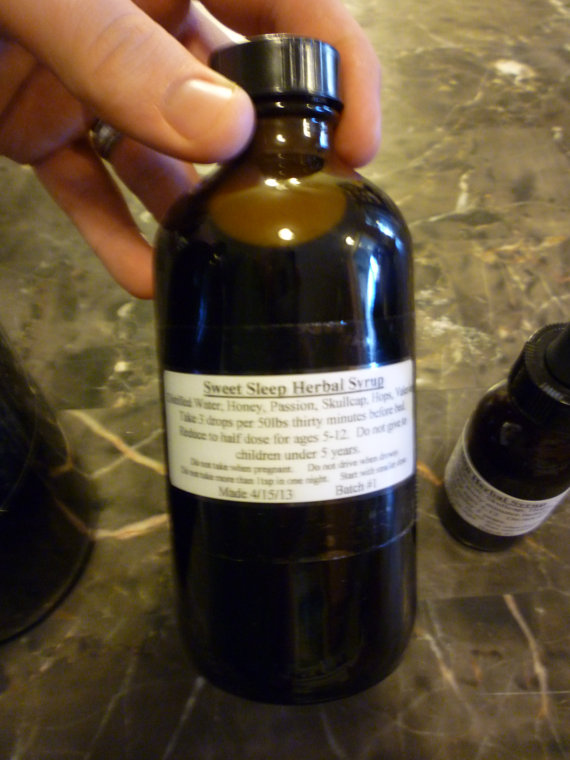
 

sweet sleep


Let us go over a few methods for preparing salves/creams/perfume-rubs:
Oil >> Olive oil is most common as it has a long shelf life and doesn’t clog the skin, though other oil can be used.

Wax >> pure or pharmaceutical-grade beeswax is best although some people also use paraffin wax or petroleum jelly. The common ratio for wax to oil is around 1:4 to 1:10, and some books I’v read even recommend 1:2. It really depends on how had you want it. 1:2 to 1:3 is good for lip balms and perfume rubs but are way too hard for salves. 1:6 to 1:8 is salve range, and anything 1:10 or above is an ointment (semi-liquid).

Herb >> The ratio of herb to oil also ranges widely, 1:5 to 1:8 is common though I’ve noted as little as 1:16, and as much as 1:1 (1:1 is rather difficult to pull off and usually requires multiple steeps). When we speak of herbal ratios we are talking about the total herb weight vs the volume of oil, so 1:8 would be one cup oil to one ounce herb. Powdered herb is not required but it makes the herbal oil much stronger.

Steep >> The are two categories of steeping. Heat or Time.  The Heat method, in my opinion, is not as strong as Time, but it does extract some properties/ability from the plant (anywhere from 50 – 100%).  Use a double boiler as to not burn the oil, and let sit in the heat for 2-48 hours (depending on the herb), stirring often and making sure the water doesn’t run out underneath.

Time>> The Time method is tried and true, but obviously takes time. Minimum steep is a week with the most common timeframe being 2 – 3 weeks. A select few steep for up to a year, but that’s rather excessive. A difference of opinion comes up when it comes to WHERE you steep it. Some swear by sun-steeping, gaining the advantages of both methods at once. Others say that the sunlight actually damages some of the chemicals, saying to place the jar in a pitch-black cabinet or closet for the duration of the steep.


I hope you have enjoyed this brief introduction to herbal preparation methods.  If anyone wishes to see what Andrew can do, or find what kind of products he makes for sale, they can visit Giant Tree Apothecary on Etsy.  There’s a whole section on herbal preparations.  I really love his muscle salve, it works like nothing else I’ve ever tried.  I’ve included a link if you click on the picture at the top of the blog.  By the way, he makes really sweet leather books, purses, dice bags, and even some interesting jewelry too.

Interruptions


Yesterday I posted about feelings and how people often act exclusively based on them, rather than using their reason.

Today I’m thinking about a related subject and that’s interruption during conversations.  I’ve noticed there are two main ways of communication.  Many people will alternate sentences while they are talking, and feel free to interject short ideas or comments while the other person is still making their point.  This is very common.  Some people take it a step further and will even start talking before the other person is done, finishing the other person’s statements or even drowning them out.

In some places, this is considered polite and even normal.

In other places, it’s more of a paragraph based style of communication.  One person makes a point, the other person waits till they are done and then responds, and it goes on like that.  I see this style in older science fiction and adventure novels all the time.

Not only that, but in every book on communication I’ve seen, the advice is always given to listen to the other person till they are done, and then begin to speak.  It’s also usually mentioned that the best way to listen is with an open mind, while not planning what to say in response.

With that being said, isn’t it amazing how a dear friend of mine, who was raised to believe that interrupting was extremely rude and a social sin, was told that she was actually evil (yes, you read that right, evil) for not wanting to be interrupted?  Yet, if she interrupted anyone she was verbally slapped down.

What this tells me is that people in general need to give up interruptions and double standards!


Favorite Home Remedies for Cough

Having just gotten over a nasty case of bronchitis, home remedies have become foremost in my thoughts. Some home remedies are better and more effective than anything on the drug store counter. Here are a few of my favorites:

For cough, a spoonfull of honey can help. Black tea with honey is better. It soothes the throat. Breathing eucalyptus and mint steam is good for congestion and cough.

Hot, steamy showers help break up congestion and let you cough up phleghm too. And when my cough gets really bad, a half shot of peppermint schnapps helps better than regular cough syrup.

Sore throats are soothed by horehound lozenges. This type of candy is great for that!

Regular cough drops are good, I like Ricola or Fisherman’s Friend. So is a peppermint herbal inhaler, or Vicks. Just breathing the vapor from an open tub of it is good.

Another great remedy is ginger tea with honey. You can make that from fresh or dried ginger, or even powder.

I made a great throat remedy by mixing powdered spiced cider with ginger and hot water, with a little honey added. Made my throat feel great.

It’s also said that eating a clove of garlic a day, swallowed with water, helps the lungs. Chewing on parsley afterwards helps the breath.

Chicken soup or even just broth is good to make your throat feel better.

Salt water gargles are good for the throat too.

Also, it helps to know what the cough is caused by. If it’s a dry, itchy cough that doesn’t produce much, you are safe to use a cough syrup with dextromethorphan, such as Tussin. If it produces mucous, it’s a better idea to try tea and hot steamy showers, because you want that junk out of your lungs.

The Risk of Avoiding Risk

It’s natural to want to avoid risk, whether it is emotional or physical. Sometimes it’s a good idea. But sometimes it can lead to increased suffering down the road. And for some people, like me, it can cripple you.

I’ve found that risk avoidance is just as dangerous as seeking it out. I’ll give an example. It’s just as dangerous to drive too slowly for the conditions as it is to drive too fast. If you drive too fast, you may lose control of your vehicle or hit an obstacle. If you drive too slowly, other people may hit you or get into accidents trying to avoid you. So the best path is (as usual) the middle path.

I was reminded of this when I saw that Richland, a small town in Washington State, has begun removing the swingsets in all it’s school playgrounds. Their reason? Swings are dangerous.

I submit that learning to respond appropriately to danger is important to emotional and mental development. If you sometimes have danger in your life, you learn to either be careful or deal with pain. You learn fortitude and persistence. If you are always protected from all adversity and struggle, you will develop no strength. How strong would you be if an exercise machine did all the work for you? How good with money would you be if you never had to earn any of it?

Emotional risk is especially important to accept. I have had a problem taking criticism, so much so that it has hampered my ability to learn and left me very immature in many ways. This happened because I would always avoid truth that was painful, and take criticism or advice personally, so it hurt so much that I’d ignore that advice. It caused me to completely reject all manner of useful information.

Think about how crippling it would be if you refused to love anyone because you were afraid of losing them. It doesn’t make any more sense to avoid advice or even criticism because you are afraid of pain. I say it because I constantly do it! And every day, I see more and more people who are afraid of risk. The American society seems to be terrified of risk, and avoiding it ultimately makes us weaker and less able to handle struggle or adversity.

We can stand up against fear, and at the same time maintain a reasonable level of safety. The key to all of this is to keep your goal in mind. Adversity builds strength. So don’t try to avoid all risk. Make it okay to be hurt, a little anyway. Being hurt isn’t the end. If you learn to recover from the small pains, the bigger ones will be easier to deal with. Life cannot happen without pain, so it pays to be strong.

Lentils a la Roh

This is really easy, nourishing, and flavorful.

1 pound brown lentils 1 pound chicken hearts and/or gizzards 1 Roma tomato per serving a bunch of water olive oil 2 or more caldo de pollo chicken bouillon cubes (the oily kind, not the dry salty kind) lemon pepper spice olive oil

Start the lentils cooking in pot with two or more large cubes of bouillon.
Lightly fry gizzards and hearts in olive oil with lemon pepper to taste. Let meat cool and chop, then add meat and remaining oil to cooking lentils. Cook lentils thoroughly and let cool a bit. Chop one Roma tomato per serving and add to bowl of lentil and meat mix.

Save rest for lunches.

Relief for a Sore Back

I haven’t been one for salves and unguents untill recently, but I have to say I love this salve my coworker makes. Much like the Healing Hand salve I mentioned in my earlier post about my ears, this stuff is made with good ingredients and it really works, and works fast. He makes it in such a way that the potency is excellent, and though it has a little lavendar essential oil in it, he didn’t over doe it.

Basically, it’s a salve of skullcap and valerian in a base of olive oil and beeswax. A little lavendar scent. That’s it. I’m not afraid to share the ingredients, because they are listed on his Etsy site, and all the artistry is in how it’s made – but this stuff is really great. The two active ingredients have a synergistic effect and do a great job relaxing the muscles. They don’t make you sleepy either because it’s not being ingested.

I have fixed sore necks and backs several times now, my own and my partner’s, and I am already planning my next purchase. I really like using something that is simple, free of extra ingredients, works better than what I could buy at the store, and is still far less expensive than anything at the pharmacy. Sometime I’ll make my own!

Tears are good for you!

Did you know that it’s very healthy to cry?

Tears serve several purposes. First, they lubricate and protect the eyes. If you don’t produce enough of them you can actually go blind.

Second, tears was away dirt and dust. This is a very good thing.

And third, tears actually carry away stress toxins that build up in the brain. So at those times when you want to cry but you can’t think of any reason to be sad, maybe it’s because you’ve had a stressful time of it and your brain needs to wash those stress toxins away.

If you do have a good, hard cry, you will nearly always feel better afterwards. Think of it as your brain taking a shower!

(If I need to cry, I usually read my mom’s poetry. Some of it really strikes me on a deep emotional level. Working on her anthology just now, I’ve had a good cry, and I can tell you I feel better for it.)