An ancient use for a Stump

via Daily Prompt: Stump

Did you know you can use a tree stump to make leather?

You can if it’s an oak stump.

You hollow out the top of the oak stump to make a deep cavity.  Let it fill with rain water.  While that’s soaking, take your hide and clean and scrape it as well you can.  Then soak the hide in the water in the top of the stump.

The tannins from the oak wood will help cure the hide for you, just the same as if you’d mashed up acorns.  Speaking of which, if you want to increase the tannins in the stump water, you can add mashed up acorns to your stump.

After you’ve soaked the hide for a while (several days),   you take it out and scrape it again while stretching it on a frame, nailing it to a large board, or side of a building.

There you have it.  Leather from a stump.

(This is only the briefest overview.  If you really want to try this, check out a natural tanning forum for more ideas and advice.)

A good habit to give up – giving up!

What if you never gave up on anything? What if giving up was not an option? How much could we achieve?

When I was young, I wasn’t taught perseverance. I was taught, unwittingly, that it was okay to give up. Nobody make me finish certain things or taught me how to overcome my fears. I didn’t learn deep down that I could make myself succeed if I just – gave up on giving up.

Countless unfinished projects litter my history, coupled with neat little stacks of regret. This craft project, that puzzle, this video game, that story, that class project, that fear…

I find myself tempted to self castigate. As if that helped anyone achieve anything! So I try to resist that temptation. Instead, I remind myself that being persistent isn’t so hard – if you take it one step at a time, one more try, one more little wiggle forward. If you fall down, get back up. It’s okay to fail. Learn from every failure and eventually you fill find success.

Winston Churchill famously said “Success is not final, failure is not fatal: it is the courage to continue that counts.”  He should know, he had a lot of struggle in his life on his way to success and he never stopped trying – even though he wasn’t always dealt the best hand.


Here are some other great quotes about perseverance!


“Success is stumbling from failure to failure with no loss of enthusiasm.”

-Winston Churchill


“The most difficult thing is the decision to act, the rest is merely tenacity. The fears are paper tigers. You can do anything you decide to do. You can act to change and control your life; and the procedure, the process is its own reward.”

– Amelia Earhart


“Look at a stone cutter hammering away at his rock, perhaps a hundred times without as much as a crack showing in it. Yet at the hundred-and-first blow it will split in two, and I know it was not the last blow that did it, but all that had gone before.”

– Jacob A. Riis

“It’s not that I’m so smart, it’s just that I stay with problems longer.”

– Albert Einstein

“A failure is not always a mistake. It may simply be the best one can do under the circumstances. The real mistake is to stop trying.”

 – B. F. Skinner

“Let me tell you the secret that has led to my goal. My strength lies solely in my tenacity.”

 – Louis Pasteur

Flood Aftermath: She started!

Or, “How to Fix a water flooded engine with paper towels and elbow grease.”

If you’ll recall my post yesterday about being flooded out and having my car stall, and having to be rescued by firefighters and police, I was left in doubt that my poor little car, who has been through so much, would ever start again.

This morning we started trying to get the water out of the cylinders. We did this by taking out all four spark plugs, then using a socket wrench and cheater bar to turn the flywheel. We got a couple big squirts out of the first cylinder and found that luckily the others were dry.  Apparently, a safety feature stopped the engine before water could get into all cylinders.  And the water had gotten in, most likely, from an improperly secured air filter cover.

The holes into the engine block were so deep we were at a loss as to how to get the rest of the water out. There was about a soda can’s worth in there. I recalled what I’d read yesterday on the internet, and said “we can use paper towels, roll them up and stick them down in there to wick the moisture out.”

We did that for a good while and got a bunch of water out. Then we went back to the auto parts store to turn in my old battery for the core credit, and at the same time I picked up new platinum plugs – the old ones were from the factory and going strong at 160,000 miles but I figured I should put new ones in anyway since we had it open. (You read that right, Hyundai builds quality.) We got back and shone a light in and found more water.

Then I said “Maybe if we shove the towel in with a thin stick…” so we did that, and stuck and pulled wet paper towels for what seemed like forever.  A metal shish kebab skewer worked great.  Finally we had everything out. Then we tried her. The starter was strong, and so was the battery, and she tried to crank.  The whole engine shook as the car tried to start.

Out comes the partner with a suggestion of starter fluid. My neighbor rummaged around and found a can – a few more tries with that and she started! Things were rough at first but she settled down after that and now sounds better than she did before the flood, because of the new plugs. I drove her around the block to make sure nothing was fouled. Tried the brakes, lights, signals, radio, everything works. So now, I have wheels again!

This faithful little Hyundai is a little more scratched and dented, but she runs, and I’m so unbelievably happy right now. What strikes me about this whole experience is that between myself, my neighbor, and my partner, each of us had a critical part to play – with one of us missing, this whole thing wouldn’t have worked. I researched and figured out what the problem probably was and how to fix it, my neighbor Charlie provided the tools and some of the know-how, and my partner provided support, some truly excellent suggestions, and more know-how. Oh, and I also handed over many power towels to my hard working neighbor.

***

I was prompted to write this post because the symptoms I had were more those of a seized engine or a broken starter than anything.  The first time we tried to crank the engine with a fully charged battery, the engine made a big lurch and we heard a loud clunk.  So it sounded like something was fatally wrong with the engine.  Meanwhile all that was required was removal of the spark plugs, much careful hand cranking of the engine, many, many, many power towels rolled up to fit in the cylinder and a light to look for water, and eventually a can of starter fluid.

10 creative uses for a milk crate

The humble milk crate is a surprisingly awesome piece of engineering.  It’s small enough to be convenient, strong enough to hold heavy loads, robust enough to take a lot of punishment, and at the same time it’s cheap to make and buy.  There are four handles all around the top so it’s easy to carry.

Basically, a milk crate does everything a bucket does except hold water, everything a tote does only it stacks better, and it’s rigid enough to hold four gallons of something very easily.

Milk crates used to be available for free if you knew a grocer, but now Home Depot and other big box home improvement stores carry them for $8-10.  They come in colors like pink and green but of course my favorite is the classic black.  If you want a bargain, by the way, the odd colors cost less.  I bought eight of them for help in my move and I may get more.


With a milk crate, you can:

Store things and carry them, similar to a plastic tote.

Use it as a step stool if you’re careful.

Make a simple patio end table.

Use it as a foot stool in the house with the addition of a pillow.

Stack them in a number of ways for modular shelves or storage.

Sit on them if you are short a chair.

Make a kitty cave with a blanket and pillow.

Stack them in two rows, lay a board on top, and make a shelf.

Hold canned goods, gallons of water, tools, anything heavy.


Do you have any other more unusual uses for a milk crate?

“The Art of Manliness,” a good read for anyone.


biplane-19489_1280


I happen to possess a pair of x chromosomes, yet I am still an avid reader of the Art of Manliness by Brett McKay and other contributors.  It’s a really good read and the site is chock full of awesome tips, knowledge, motivation and philosophy.  I don’t show myself in the forums or contribute, but I happily soak up the knowledge and learn a whole lot every time I go there.

I’m interested in becoming stronger, more confident, more gentlewomanly, more straight in my dealings, and more independent.  I want to build my lean muscle mass, know what they are talking about at the lumber store, be able to patch drywall, and maintain my own car. And knowing about shaving and men’s fashions is useful in case I need to give someone a gift.  I also want to be prepared in case something happens to my little family, disaster or otherwise.  I respect people like Winston Churchill and Teddy Roosevelt.  So the Art of Manliness really is for me.

Here’s a sampling of the things you can learn there, whether you are male or female:

Home repair, fitness, vehicle maintenance, really great easy to follow guides on skills – everything from grooming to wilderness survival, excerpts of classic books and texts, cooking, hobbies, so much more.  They try to put together everything you need to be a complete man – nay, a complete human being.

What I like most about AOM is it sets out to teach you all those skills you might have learned from your grandpa – skills that are dying rapidly.  So I read, learn, and start to carry the torch forward.

If you are curious too, click here:

Art of Manliness Blog


Courtesy is Power

Courtesy is one of the best ways we have of affecting the world around us!

With courtesy, politeness, and good cheer, we can have a measurable ripple effect that has lasting consequences. A cheerful smile, a kind word, a sincere compliment, unexpected forgiveness for some small slight, all have an impact that is incredibly powerful. The best part of it is that it spreads. Being angry or sad is contagious too so if we consciously choose a positive attitude (even if we don’t feel it) we can gain better lives for ourselves and benefit everyone around us.

I know I am repeating myself a bit here but I can’t understate the importance of this idea. Consider going through a checkout line. Everybody is tired and hungry. It’s rush hour, and people just want to go home. Think about the difference, and the ripple effect, of behaving in an impatient way versus behaving in a calm, polite way. If everybody is grumpy, everybody stays grumpy. It leads to a worse day with more stress for everyone.

Now, what if ONE, just ONE person in line smiles, says a kind word to the checker, thanks the bagger for their hard work, and makes way for the lady with the walker? Everyone’s day is brightened, just a tiny bit, with no added effort. Maybe the checker with the sore feet smiles at the next customer. Maybe the bagger takes a little more care with the next customer’s eggs. It pays forward and helps everyone.

At work, I do a lot of customer service. 9 times out of 10 I am able to calm an angry customer simply by letting them know that I care about their problem and I want to do anything I can to fix it. Then, even if I can’t fix it, they are often satisfied with me because they understand I did my best. I have seen so many times when an angry person calls up tearing my head off. I listen, I demonstrate understanding and caring, that human connection is made, and we end the call amicably. Then, at home, they have a good memory of someone helping them, they have less stress, and they might be nicer to the next representative they talk to. If I had been rude, that would have been an endless chain. The same is true of my fellow employees. A little friendliness spreads.

It’s a really amazing thing once you start noticing this. People are more positive toward you, you have more people behaving nicely toward you, you get more opportunities, and most importantly, you have an impact on how people treat you. You are no longer at the mercy of the world, you are changing it for the better, just a little bit. Sure there are other ways to make a change but this is a great start.

How to cook beans in Nevada!

You will need: A bucket, water filter, rope, river, ground, firewood, paper, matches, a pot, spices, salt, a grate, rocks, a long stick whittled into a spoon, a large plastic tub of some kind, a water bottle, and beans.

First, take the bucket and the rope to the river. Carefully lower the bucket into the river and fill it with water. Haul the bucket up and take it back to camp.

Pump the water from the bucket through the filter and into water bottles. Take beans, add to large plastic container, and put water over the top. Set in the sun. Spend the next several hours going to town or doing camp chores.

Once the beans are somewhat softened, start a fire in the fire pit. Place the pot over it on the grate. The grate is probably something simple, like a wire rack balenced on rocks or cinder blocks. Put the softened beans in the pot, with more water, spices and salt. Bring to a boil and simmer for a couple of hours.

If you want super deluxe wonderful beans, add rice or possibly hot dog chunks during the last hour. Stir with clean hand-whittled wooden spoon. Boil till beans are soft, place in bowls, and wait for the whole mess to cool down…

Eat for breakfast and lunch the next day, or until you run out, and it’s time to make beans again.

These instructions will also work in northern Idaho.

Cancer-fighting berries?

blueberries_84023236


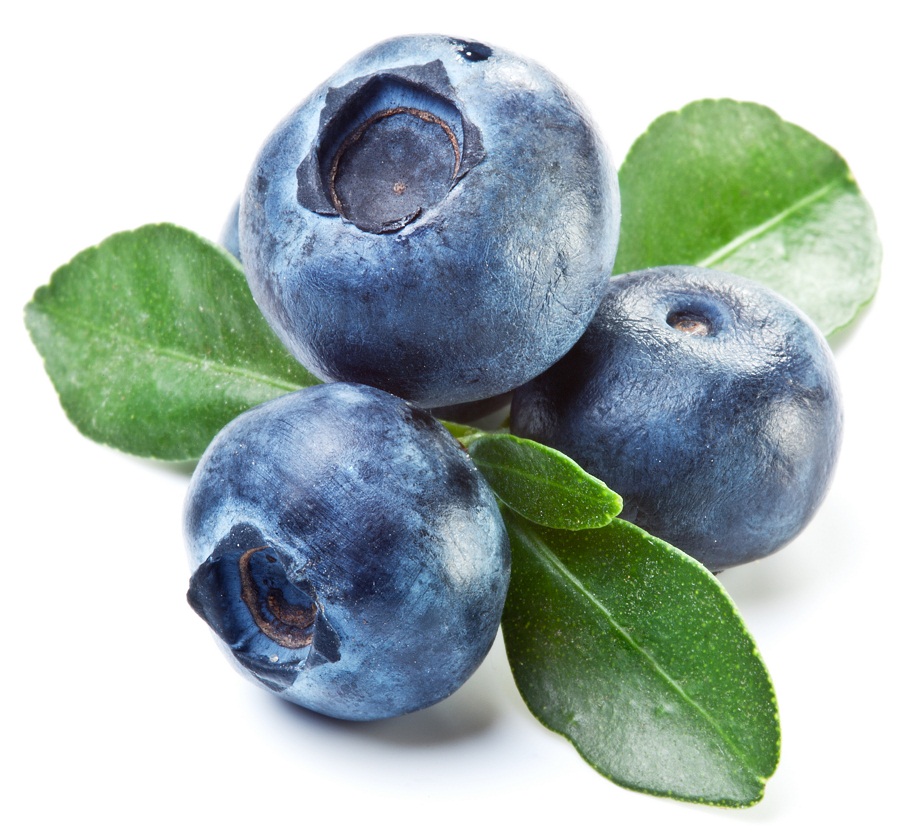
According to my recent research, cultures where berries and nuts are eaten most frequently seem to have the least incidence of cancer. Part of this can be traced to ellagic acid, which may have an effect on cancer cells. There have been studies done where mice have been fed ellagic acid, and they developed 45% fewer tumors.

Pure berry juice is an important source of iron and many other vital nutrients. Some of the most nutritious berries are blueberries, black currants, and blackberries. The darker, the better! The more color the berry has, the more nutrients and antioxidants it has. Berries are best eaten fresh, but you can also get them dried and in many other forms.

If you drink berry juice, try to get something without sugar or added water or flavors, if at all possible. Then you can add stevia or sugar of your own, and you will end up getting a purer food product.

Berries are good for you. Lots of nutrients, and they satisfy the sweet tooth.