Blog

Your Momma wears Army boots!


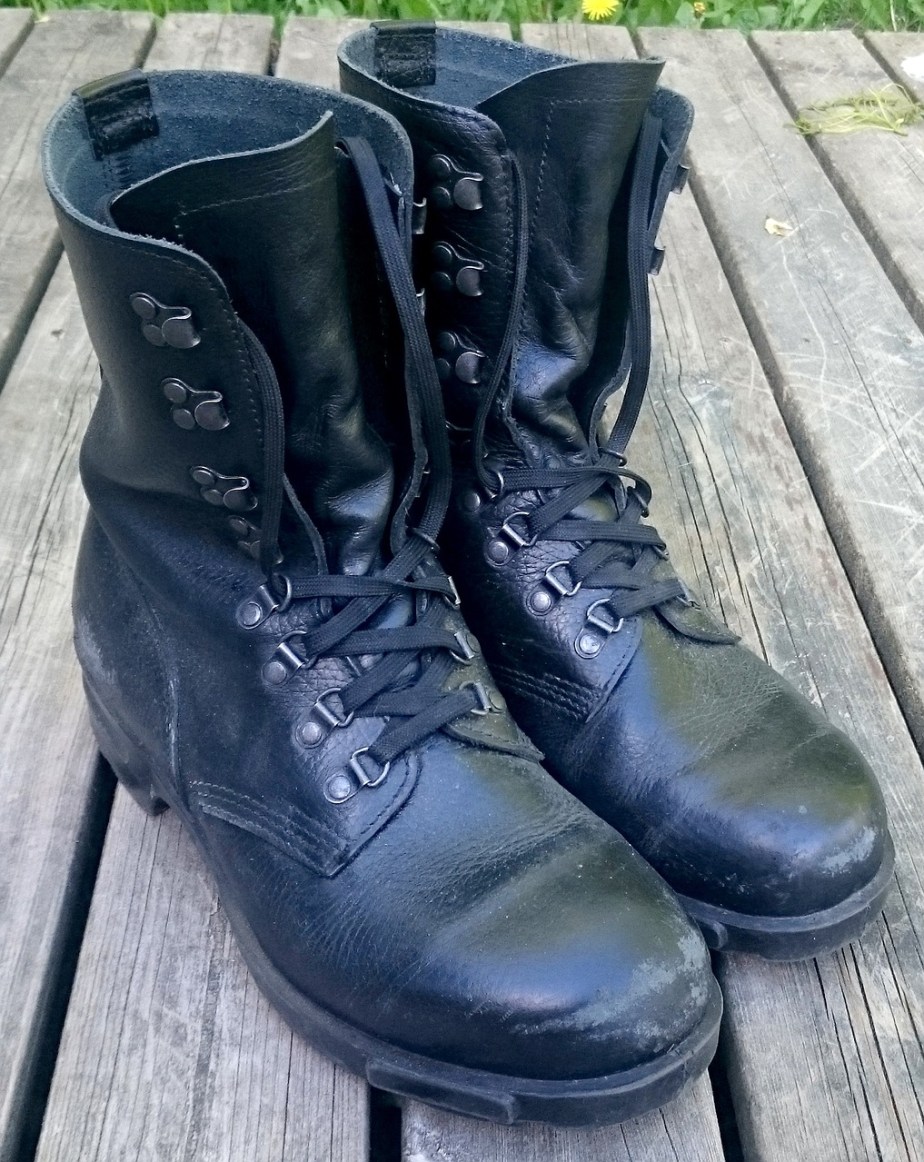
Well, your Mom might not, but mine did, and I’m proud of it. I wear them too, every time I’m going to be on rough terrain, and in the winter when my sandals just won’t cut it. When my Mom wore Army boots, they were still solid leather construction, black in color.  She has wide feet, and at the time they fit her better than shoes available in normal stores.  They also lasted for years, unlike other junk shoes.  They looked just about like this.  She doesn’t wear them anymore…

…now I do!  My Army boots are desert configuration, with vents on the side, leather and cloth. More comfortable in Arizona, for sure, and very good boots.  I buy them now the same reason why my folks bought them then – because good shoes can be found at military surplus stores, cheaper than most other places, and they last a long time.  A really long time.  I’ve had my pair for about seven years now and they are still in great condition.

I have a funny story about that. When I was little, another kid tried to taunt me by saying “your Mom wears combat boots!”

The problem was, I didn’t even know about the insult!  Since I didn’t think there was anything wrong with it, I fired back with “well yeah? your mom wears high heels!”

Actually I doubt the other kid’s mom did, it wasn’t exactly a high class neighborhood and she probably wore ratty sneakers like everybody else. But MY Mom wore boots, and so did my Dad, actually.  She could hike up a mountain with the best of them.


Do you feel grown up?

I think that in this world, there are many people who have never really grown up.  I write, of course, from the perspective of someone living in the US so my view may be skewed.  I see many folks every day who have adult roles and have adult bodies yet still apparently feel, think and act pretty much as they did when they were in high school. I’m not saying they are bad people, in fact many of them are very nice, intelligent, and fun to be around. However, I’ve noticed that I have some traits of a superannuated child.  That really bothers me so I’m trying to overcome them and become a true adult.

Modern child psychology claims that a brain doesn’t fully form until you are at least 25 years old.  One person I talked to recently said 35.  My own study and observation tells me that this can be altered with training and practice. For example, think of the adult roles children were expected to take on even less than a century ago. Think of farm kids taking care of animals or raising their siblings, city kids running small businesses like landscaping or paper delivery. Think back even further to pioneer kids who might run a household at 15, or young boys who might go off to war or a sailing ship at 13 or 14.  Those were not easy times, they were full of hardships. Yet those young people had practice with ever increasing levels or responsibility, from their first chores at the age of five or so, all the way up through full adulthood.

In comparison, look at the kids of today, especially in the United States. Many don’t have much in the way of chores to do, many don’t work a job till high school or later. In certain parts of the US, giving your kids chores can get you reported to Child Protective Services! Then they are expected to take full adult responsibility at eighteen. There is little or no ‘ramp’ up to train them how to be adults.  The poor dears are floundering with no idea what to do. Is it any wonder these kids are “undeveloped” and often fall flat on their faces, moving back in with their parents, or never leaving?

I moved out at eighteen. I’d had a couple of jobs and I’d done chores as a kid, so I had some idea of handling money. But I still made some pretty monumental mistakes. And in this modern world, that seems to discourage even adults from making informed decisions, I am moving toward a true adulthood. The road to adulthood is embracing personal responsibility. That one issue, in particular, is a sticking point, as we are trained out of taking it.  “It’s not my fault!” is the oft repeated refrain.  So I’m looking at my weak points, correcting those, and using the example of famous adults from history to motivate me. I’m practicing the fine art of self restraint and delaying self gratification. That in particular is rather difficult. But I’m trying, because it’s important to do that.
Can you think of ways we could better guide our kids towards a full and flourishing adulthood?

Choosing Colors


While this is considered an absolute rule by many artists, especially painters, I consider it more a helpful hint and something to try.

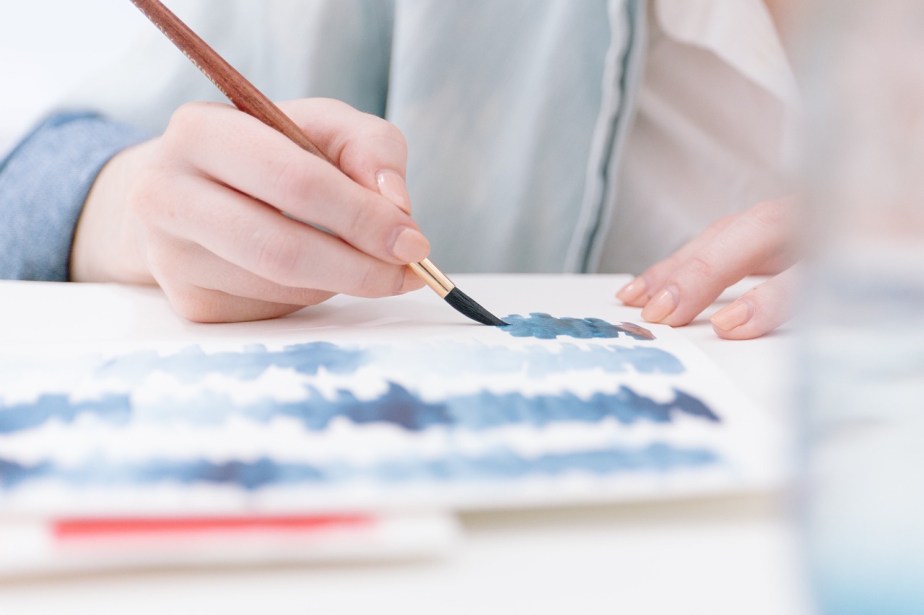
The idea is to use a limited palette of colors to create a unified look. Pick three colors that represent the majority of items in your work, plus black and white, and only use those three colors (and the colors that can be mixed from them) to do the whole piece.

It’s easier than it sounds. For example, a forest painting might be done entirely with a yellow, a deep green, and an umber. Or a seascape might be a deep blue, a deep green, and a purple. In watercolors, usually this means picking three tubes of pigment and just using those. This really does help avoid the problem of the painting looking too busy or garish.  I’m sure we’ve all seen a painting that just uses two many colors!

I’ve been told by an old watercolor painter that this is an absolute rule except in the case of city scenes, but I am not willing to be quite that rigid about it.  Still, choosing two to three colors and using them and their mixtures can make a really nice, unified looking piece.

A High School Class every human needs to take


Many young people come out of high school completely unprepared for life. I know I was. My folks did their best but there was so much I didn’t know how to do. I couldn’t balance a checkbook, didn’t know how to write up a proper budget, didn’t know how to add air to car tires, and a whole host of other things. Now, much of this was due to my own disinterest in most things that were useful. So again, I’m really not blaming my folks.  I went to an alternative high school and the type of class I am about to outline is something they could easily have done.

I would call the class “Life Skills.” It would cover all the little things that everyone needs to know, but few remember to teach. Here are some of the subjects it would cover:

Basic cooking and nutrition (it’s not just for Home EC students)

Basic money skills, like how bank accounts work, how checks work, how debit and credit cards work, how a credit score works

Simple automotive maintenance. How to tell when your tires are low, what to do if the check engine light comes on, how to change wipers and washer fluid. Simple stuff.

How to rent an apartment, what to expect when bills are due, reasonable expectation of cost, ways of approaching landlords if you have a problem.

Now, the list could go on and on. But it isn’t difficult to imagine a Life Skills class like this. It could cover a lot of the simple, basic things that make life so much easier – those things we may or may not get from our parents, or that we may not be receptive to when someone tries to teach us. I think our kids would be a lot better prepared for the world with a class like this. It would sure be a heck of a lot more useful than “Global Citizenship” or rot like that.

Would a class like that have been useful to you?

Your Defense against Snake Oil

When you are looking for alternative therapies and treatments, it can be a real pain to tell the scammers from the real deal.  So many people make a living by preying on the unwary. It’s tough to avoid being fooled sometimes, so I wanted to offer a few basic guidelines to help you separate the wheat from the chaff. \
Rule number one: Distrust intangible products.

Rule number two: Distrust all quick cures.

Rule number three: Don’t trust testimonials.

Why do I say not to trust testimonials? Because they create false confidence. It’s hard not to be swayed by reading letter after glowing letter about how that miracle cleanse cure fixed their horrible problems with gas, and their pictures of the parasites they passed. Keep in mind that the letters are faked and those nasty pictures are just mud dipped strings dropped in a toilet. People lie. They lie a lot more when there’s money involved.

In general, be cautious with people treating conditions like cancer, impotence, skin problems, and other things that are difficult or expensive to treat. They prey on people’s fear and they offer false hope in exchange for low, low payments of $49.99 or whatever the case may be. Ultimately, it would be smarter to save that money and spend it on whole foods and healthy living.

As I said in my rules, run away, far away, from anything promising a quick cure. Neither cures nor getting rich happen quickly. Just like success, usually a cure requires work and dedication. Of course, it depends on the condition. You will see this a LOT in the field of weight loss. People will promise anything because they are counting on people being so dazzled with the promise of losing ten pounds a week that they won’t notice what’s going out of their wallets..

If you don’t already believe in them, run away from anything involving crystals, magnets, pyramids, positive vibrations, or light. Run away from anything related to homeopathy.  If you believe in these therapies, that’s your decision – but for pity’s sake, don’t pay much for it! That’s what I meant by people selling intangibles. Homeopathy counts as an intangible because it’s all just distilled water. Look it up, it’s true.

On the other hand, not all natural cures are bunk. Naturapaths, for example, can do amazing things with the right treatments, which can include supplements of various kinds. They have a lot of medical knowledge and use it well.

Speaking of supplements, some of them can really be great. Some of the old reliables are kelp, omega-3 fatty acids, Vitamin C, E and A, iron, and good foods like cranberry,  tree nuts and fish. The list is long and doesn’t need to be repeated here.  In general, whole food is better than pills, but liquid vitamins are best if you have to take them. Capsules are better than tablets if you have to absorb something.  Don’t forget that some vitamins and minerals require fat to be absorbed properly.  The best vitamins, minerals, and other supplements have good amounts of research behind them.

For example, you can actually find good evidence that turmeric is an anti-inflammatory, garlic helps with viruses, and peppermint helps with asthma and stomach problems. There’s lots of research on ginger, ginkgo, ginseng – the list goes on.

The more educated you are, and the more you understand the psychology of selling, the better you will do in helping yourself as well as avoiding scams.

What the media won’t tell you about health insurance


At work, I’ve been in the middle of this day in and day out, and I realized it was time somebody told everyone else just what’s going on in the US in regards to health insurance.

Not only are premiums going up as a direct result of the Unaffordable Healthcare Act, but deductibles are going up.  Where medical deductibles used to be separate from prescription ones, now they are being rolled in together.

I realize this is a little abstract so I’ll give you a specific example.

A fairly well off man called me the day before yesterday.  He is diabetic, and wanted to know how much his insulin was going to cost for a three month supply.  “I paid for the most expensive plan so it should be about what I had last year,” he said confidently.

As gently as I could, I explained that his new plan still had a $3000 deductible.  I asked him how much he was putting into his Health Savings Account, where you put pre-tax dollars to help offset your higher costs.  “$33 a paycheck…” was the answer.  Barely a drop in the bucket.  And why not?  He was paying the highest premium after all, several hundred dollars a month.

“So how much will my insulin be before my deductible is met?”

I explained that Lantus is about $450 a box even at the negotiated rate, and since he uses 3 boxes a month, he’d be paying almost $1500 for just the first month.  This is the kind of time I really hate my job.  I know that with that dosage he can’t just go off his insulin, yet despite the fact that he’s working for a major company and making a fair amount, there’s no way he could afford it.

Obviously, that call didn’t end well.

Stories just like this are happening across the US.  They happened last year, they’re getting worse this year.  Sure, people can get a certain short list of preventive medications.  And they can get a small amount of free testing.

But they can’t afford the treatment!

Rekindle your Passions


Sometimes, when a person is being dragged down by nearly every aspect of life, they have to stop and really think about what they love.  At that moment, they have the opportunity to reconnect with the passions that used to drive them.  Not long ago, I found myself giving up on and turning away from nearly everything I ever loved, and nearly forgetting HOW to love at all.  Sure, I could like things, but it was always transitory and a little hollow. There was no incentive to try or do anything because the reward for success was so small.

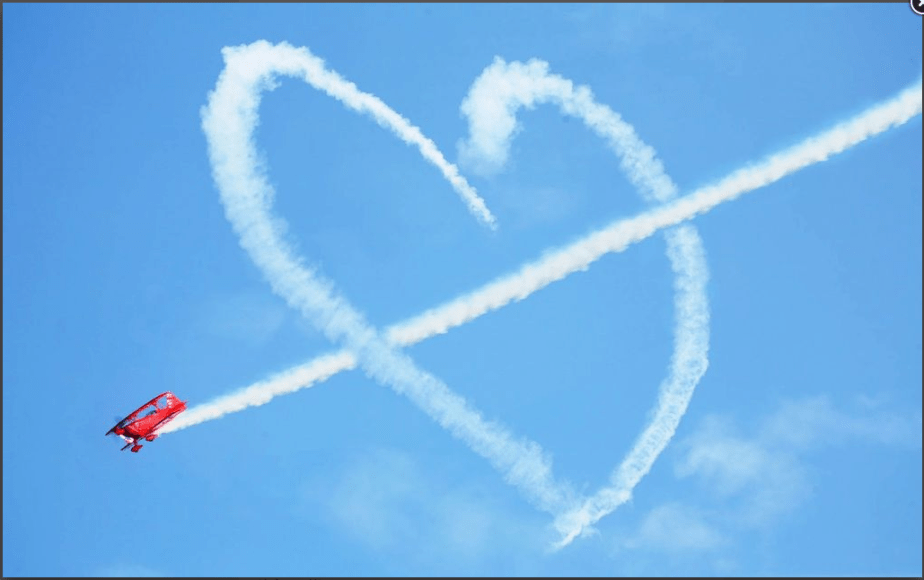
One of the things I used to love, and am learning to love again, was flying.  I did quite a bit of it, but then my fear and social anxiety raised their ugly heads.   I wasn’t successful in getting my license, and later financial troubles took me away from flying altogether. This hurt a LOT.  Eventually I got tired of it hurting and started caring about it less.  When we give in to fear and pain as I did, we die inside.  Sure enough, I started caring less about other things too, like art. Art is the one thing I’ve loved since babyhood.  Then various disasters struck and I started running from my fear and pain there too… it was a decline that ate away at my joy.   Only now, coming out on the other side of it, can I see just how much.

I once started a flight diary. I lovingly described every detail of my aviation experience. I stopped when I quit flying. The question now remains, how do I want my story to end? In defeat, or victory?  A famous aviatrix once believed that success lay mostly in tenacity, in not giving up. I was very good at giving up. How about giving that up?  When I started this process, I wondered  “do I have what it takes to say ‘from where the sun now stands, I will give up no more, forever?’   I wasn’t sure if I did or not.

I started rereading some of my old favorite authors, did art about flight again, read AirNav to get a look at what’s in my area. I felt tension build inside me, fear mixed with happiness.  It was rocky and I still don’t have it down perfectly.  I have setbacks.  Still, overall, I felt more passion and joy reenter my life.  In essence, I re-found myself.

You can do this too.  Is there something you’ve given up because of fear or loss of hope?  You can have it back again.  Let’s feed the joy and let it outshine the fear.

Blog your way to a book

Blogging can be a great way to get enough material to turn into a book. I have seen people stitch short stories into a book, poetry, anecdotes about life, webcomics of course, and several other topics. The excellent blog and website “The Art of Manliness” has spun off into several books, all of which are truly excellent reading.

I’ve done this too. In fact, my novel “The Dice of Fate” was largely published on a blog, in its rough draft form, before I polished it and made it into a full length novel. The short format of the blog was accessible enough that I wasn’t daunted by the writing, and I found that I’d written the whole story, in little chunks, in just over a month. It took a couple of months to polish and much editing, of course, but it can be done.

Your blog will give you the most bookworthy material if it’s all centered around a theme. For instance, if I were going to turn this blog into a book, I might pick two or three of my categories. For instance, I might pick “life,” “life and love,” “life hacks,” and “randomness” if I were making a book about my thoughts and observations.

I might pick “art,” “art tips,” “writing,” and “publishing” if I were making a book about art and improving your work.

Making your blog entries into a book doesn’t mean you have to leave them as they are, either. You can go back and edit them, restate things in a better way, expand on points, and more. It can be a lot of fun seeing how you’ve grown, and giving your original thoughts the advantage of your increased knowledge and perspective!

Then, when you have everything polished, you can self publish as well as make your work available as an ebook. This kind of book is a natural for that.

Don’t forget to have someone else (or several someones) read your new book to make sure it’s interesting, topical, and flows well.

Happy blogging!

Guest Post: Herbal Preparation Methods

This post is by my friend, Andrew Johnson, who  is an herbalist, craftsman, father, and all around interesting person.

Throughout my herbal studies, I have come across countless methods of preparing herbal remedies (tinctures, decoctions and salves). Though there are some similarities and common do’s and don’ts, the methods vary quite widely. I have tried many of them and found the methods that work best for my purposes, but choosing a method or preparation can be very personal. Ranging from a sacred ritual, to carefree and circumstantial, to perfectly calculated and measured to the gram, to sparse and businesslike for maximum profit, to triple-steeped and jam-packed for maximum strength.

Many herbalists will give out the ingredients of their creations but giving out their method is like a security breach of trade secrets. As for myself, if a beginner asks me “how do I do this?” I often give a range of simple methods and say “whichever you are more comfortable with.” There are differences in strength with each method, but the method you want to use is dependent upon several personal factors:

Are you going to sell them?  If so, you have to consider many different variables, the largest of which is the use of common allergens.
How long do you want it to keep? If you want any sort of shelf life, alcohol (vodka or Everclear) is a common additive.  There are also certain plants that extend shelf life.

What tools are available to you?  Jars, fine strainers, and small scales are must-have tools.

When will you want the preparation to be complete?  Depending on the urgency for the required preparation you may not have the time for 80% of the methods.

What are you comfortable with?  Many recovering alcoholics hate even the thought of alcohol based products, as do some pregnant women.

Regardless of the method, label everything a LOT and be VERY detailed.
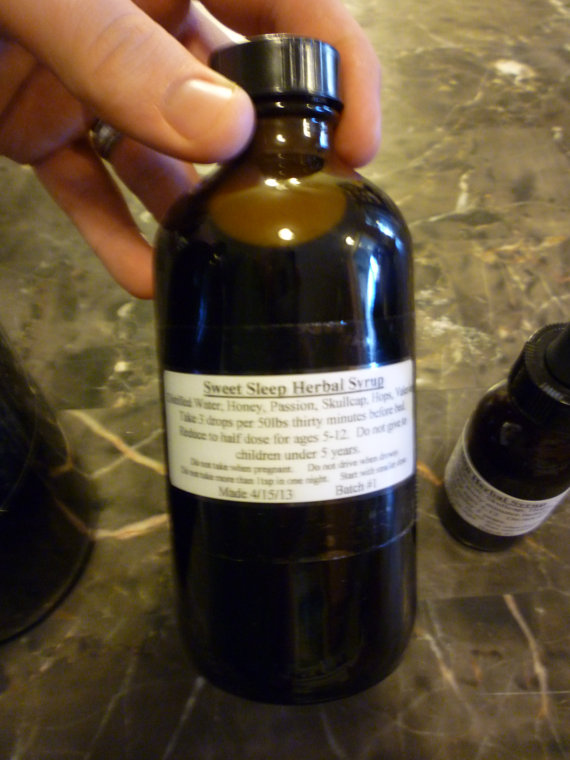
 

sweet sleep


Let us go over a few methods for preparing salves/creams/perfume-rubs:
Oil >> Olive oil is most common as it has a long shelf life and doesn’t clog the skin, though other oil can be used.

Wax >> pure or pharmaceutical-grade beeswax is best although some people also use paraffin wax or petroleum jelly. The common ratio for wax to oil is around 1:4 to 1:10, and some books I’v read even recommend 1:2. It really depends on how had you want it. 1:2 to 1:3 is good for lip balms and perfume rubs but are way too hard for salves. 1:6 to 1:8 is salve range, and anything 1:10 or above is an ointment (semi-liquid).

Herb >> The ratio of herb to oil also ranges widely, 1:5 to 1:8 is common though I’ve noted as little as 1:16, and as much as 1:1 (1:1 is rather difficult to pull off and usually requires multiple steeps). When we speak of herbal ratios we are talking about the total herb weight vs the volume of oil, so 1:8 would be one cup oil to one ounce herb. Powdered herb is not required but it makes the herbal oil much stronger.

Steep >> The are two categories of steeping. Heat or Time.  The Heat method, in my opinion, is not as strong as Time, but it does extract some properties/ability from the plant (anywhere from 50 – 100%).  Use a double boiler as to not burn the oil, and let sit in the heat for 2-48 hours (depending on the herb), stirring often and making sure the water doesn’t run out underneath.

Time>> The Time method is tried and true, but obviously takes time. Minimum steep is a week with the most common timeframe being 2 – 3 weeks. A select few steep for up to a year, but that’s rather excessive. A difference of opinion comes up when it comes to WHERE you steep it. Some swear by sun-steeping, gaining the advantages of both methods at once. Others say that the sunlight actually damages some of the chemicals, saying to place the jar in a pitch-black cabinet or closet for the duration of the steep.


I hope you have enjoyed this brief introduction to herbal preparation methods.  If anyone wishes to see what Andrew can do, or find what kind of products he makes for sale, they can visit Giant Tree Apothecary on Etsy.  There’s a whole section on herbal preparations.  I really love his muscle salve, it works like nothing else I’ve ever tried.  I’ve included a link if you click on the picture at the top of the blog.  By the way, he makes really sweet leather books, purses, dice bags, and even some interesting jewelry too.

The Class Every Artist Should Take

I would call this class “Studio Skills” and it would be a basic prerequisite for any art program.

You see, I managed to complete a four year art degree without knowing proper brush care, how to approach a gallery if I wanted to hang my work, or the best way to handle watercolor paper!  I realize that I didn’t get a painting degree, but it was Interdisciplinary Visual Arts and as such that assumes a basic grounding in several kinds of art. A class covering basic studio skills wasn’t even offered!  Would you believe that?  In order to learn those things, I would have had to take classes in each individual type of art to learn these kinds of things.

So here is my suggested curriculum, and this would be a basic course  offered to all art students.

A good Studio Skills course would include: Brush and tool care.  How to get the most out of your brush or other art tools.  How to properly sharpen art pencils, pastels, watercolor  pencils, etc.  It can be harder than it looks.

How to prepare materials.  How to stretch canvas, tape watercolor paper, gesso surfaces, etc.  Identification of paper sizes and types.

Studio care.  Cleaning and maintaining the art space.  Basic safety regarding hazardous materials.  Use of ventilation.

Recognition of art materials.  Brush sizing, canvas sizing, and tool uses can be confusing and people need to know about it. The opportunity to try different materials to see the difference would be appropriate here.

Presentation of your work.  How to prepare it for sale or display.

Marketing and promotion.  This would include how to talk to art studios and museums, best methods of contact, dos and don’ts for contacting other artists, and publication requirements.

Put simply, no art student should graduate with an art degree without knowing something about how to present their work to best effect, and no one should be allowed to graduate if they don’t even know how to market themselves.   Keep in mind that my nationally recognized university didn’t have anything even close to this.  Studio skills might have been taught piecemeal in the individual art classes but in many cases, it was assumed that you already knew this stuff.

If someone is in a computer art program, or sculpture, or ceramics, they could have a similar basic skills course. Much of it is universal to all artists. In fact, a basic skills course would be good to have in any field of study – too much basic knowledge is assumed by teachers and sometimes never acquired.

Want to try the materials I use?  Check out Dick Blick.com!