Blog

Daily Prompt: Tree

via Daily Prompt: Tree

Tucson trees are fascinating to me.


img_0033


Some have spines and fruit. Even the mesquite have that.


img_0030


This one has looks like it’s related to a bean plant.


pine-trunk-1000

We have pines here, too, that sometimes grow into improbable formations.


pine-with-border

Or they grow into twin trunks, like this.


tree-trunk-1000

I love it when trees grow old – then they develop character.

trunk-with-frame

It’s truly a feast for the eye when you look at the fine detail.

All this wealth – in one neighborhood!


What is “Animal” anyway?

via Discover Challenge: Animal

Some draw a clear demarcation between “animal” and “human.”  Knowing that humans are in fact animals and there’s no getting around that, I usually draw my line between sapience and non sapience – the ability to think, and not.

Even that is a sliding scale.  Emotion is experienced by most mammals and even some reptiles.  I read an article that used sensitive microphones to listen to lab rats while they were being tickled, and it caught a laughing sound and reflex.  Elephants communicate over long distance using subsonics.  Female cougars sometimes bequeath areas of land to their female cubs when they get old enough to need a territory but can’t find their own.  Tigers have been found to engage in long disstance communication.  Certain prides of lions in Africa have learned to hunt cooperatively with the local tribesmen.  I’ve known cats who are self aware.  I’ve seen parrots who speak cognitively and some can even read and spell simple phrases.  Chimps and gorillas can learn sign language.  Dolphins and bonobo apes have sex for fun.

With all these things that are true and verifiable (the cat facts especially in a wonderful book called “The Tribe of Tiger,” by Elizabeth Marshall Thomas, then is there even a dividing line?  I think it’s all a sliding scale of different levels of ability.  My cat, for instance, has an amazing social intelligence, and good hunting ability.  She can understand language, she obeys customs taught to her by another cat that are different than feline norm, prefers Japanese to English, and tells me when to go to bed and when to get up each day.  Yet, her planning ability still isn’t the best.  She’s definitely intelligent, but in a different way than I am.

Sometimes the line of demarcation between human and animal, or sapient and non sapient, is merely how much we see and notice.

10 ways to add value to your blog

via Daily Prompt: Value

If you add value to your writing,  your readers will be more likely to come back.  My favorite blogs, the ones I bookmark and come back to again and again, offer me fantastic value and relevance in my life.  I want to be like them.  So when I post, I like to think “what makes me want to read a blog?  What is valuable to me?”  And then I try to give that to my readers.

A good blog is like a conversation in that both participants benefit from it.  Both reader and writer find it valuable.  The writer, because they share their messages and ideas, and the reader, because they learn something, are amused, or have their thoughts expanded or provoked.  So when you write, always try to create a connection.

10 ways to add value to your blog:


Relate personal experiences

When writing about your own experiences, think “how can I relate this to others?”  Doing that can create a connection, help people feel they aren’t alone.

Share your knowledge

You might think everyone knows about a certain subject.  However, you might have a perspective or know a particular little tip that no one else does.  You can share that.

Be bold

When writing, dare to go a little outside the norm.  Use an active voice, write thoughtfully, and always be honest with yourself and your reader.

Know your audience

I see this all over the net, but what does it really mean?  Take a look at the blogs of people following you.  See what they write about, what they are interested in.  This can help you see what you can offer them, and also give them some extra clicks and views.

Read, read, read

To be a great writer, you must read.  That will give you more to write about as you ponder the ideas you see in the books and articles you explore.

Research

When writing an article about a particular subject, think “Is there something I can offer that other bloggers/writers haven’t?  Is there a connection I can make here that they didn’t?”  Then include that.  It will really add value and freshness to your blog.

Write intentionally

Even with a daily prompt, or a daily check-in post, think “will my readers be elevated, informed, or entertained by reading this post?”  Sometimes all it takes is a little more detail, a few different wording choices to make this answer “yes.”

Be positive

Even if you write about difficult or negative subjects, keep positivity in mind.  Offer solutions if possible.  Encourage your reader.  Look for the lesson in your work, and gently point toward it without being preachy.  This can be a delicate balance but it can be done, with practice.

Delete if needed

Sometimes, a post just doesn’t turn out the way you wanted.  It’s perfectly okay to go back and delete it later if it doesn’t serve the theme of your blog.  You can archive it of course, for later reworking, but you don’t have to keep it up.

Edit, edit, edit

Take an extra look at your posting before you submit.  Give it a thorough check for spelling and grammar issues.  Simply doing this will create a better product, and add value to your work.  It also shows you care about your ideas and your readers.


If you add value to your blog, and think about these principles as you write, you will have more readers who keep coming back to read your work!




A Tale of two yogurts: part 2

Soy Milk and Soy Yogurt
I recently found that I could do exactly the same thing with soy milk. I don’t like soy yogurt as well as I like cow or goat yogurt but I’m choosing at this time to stay away from dairy products so here is how I make soy milk.
Ingredients needed:
4 ounces (around a half cup) of raw soy beans.
Look for them at an health food store, co-op or ask a local feed store if they can provide them.
Blender
Sauce pan
Nylon stocking, knee length
You can get them at your grocer’s in boxes of five pairs or something and they’re useful for lots of things. You can even wear them if you want!
Place a half cup of beans into a large bowl or pan and fill with cold tap water. Let stand for at least 8 hours. After this time, drain water off of beans and let that go down the drain or into the flower bed. I use a colander.
Place soaked, drained beans into your blender, fill to near the lip with cold water, put on the lid and process until you have something smooth and relatively thick. Sometimes it takes a while and you may want to use a spatula from time to time (with blender turned off) to move unprocessed chunks toward the bottom of the blender jar.
When you judge it’s done, move your bean slurry off the blender stand, take your magic knee sock and stretch it over the open mouth of the jar. Holding with one hand, tip the jar over your sauce pan. With the other, shake the jar a bit, try to coax all of the slurry down into the stocking.

Remove the sock from the jar and hold the stocking shut, twisting it is good. From here on it’s a process of kneading, gently squeezing the mash within the stocking to get the bean juice out of the pulp. This takes a little while but is sort of transcendental and even a little bit sexy so it can stand in for yoga or meditation or something.
When you have the pulp inside the stocking at a consistency about like homemade salt clay, put the sauce pan on about medium heat and cover. Turn the stocking inside out and dump the bean leavings into a bowl. Now run, go feed that to your chickens. (I did tell you to buy chickens did I not?)
Bring the virgin soy milk to a gentle boil and continue cooking for ten minutes. This will kill off some unwanted organisms and lessen the amount of gas you might experience on drinking the stuff. When done you can pour the now “experienced” soy milk into a jar or pitcher and refrigerate. It’s funny how foamy it is at first.

Should you want to make soy yogurt, cool it to body temperature and follow the yogurt recipe above including the starter. Soy yogurt is good in veggie stroganoff, or mixed with dry onion soup mix as a dip for baked corn chips.
A caveat:

Soy is controversial. It does contain phyto or plant estrogens, chemicals which mimmic the female hormone that some of us manufacture independently. Like regular estrogen, the plant type has been accused of causing certain kinds of cancer and it may contribute to infertility in males. I tell women to use soy or flax seed meal in their bread because it will cause their husbands to talk with them more freely but I’m joking—-mostly. As with everything else, it’s probably best to use soy in moderation. A serving or two per day perhaps.

A Tale of Two Yogurts: Part 1

Making your own soy milk, and both standard and soy yogurts

I want to talk about three things in this little article. These are all things that have been known about by lots of people, but not by most people, and generally not all found in the same place. I’ll start by telling you how milk yogurt is made by me at least; and I’m lazy and like to do as little work as possible. In part 2 I’ll tell you how to make soy yogurt, and the milk it’s made from.

Moo Yogurt (Or Baa)

Ingredients needed
Thermos bottle
(vacuum flask) as wide a mouth as you can find

Milk, cow or goat, preferably not that low-fat stuff.

Powdered milk if you wish a thicker yogurt.

A yogurt starter
(just plain unflavored, not vanilla yogurt from the store. I usually use Greek culture because I admire Socrates.)

Procedure:

pour a pint or more of milk into a sauce pan, place over low heat. Stirr frequently till it heats to about body temperature. If you have a thermometer, 95 F or 35 C is good, but you can use your sense of touch to test that it’s not really not nor cold. Think tepid bathtub, or baby bottle.

When desired temperature has been achieved, fill your thermos with hot water from the tap to preheat.

Stir a couple of table spoons of your starter yogurt into your warm milk. This is harder to do than one expects. A bit of spoon work is wanted.

Now pour the water out of the thermos and the milk and yogurt mixture in. Screw the lid on tightly. I like to wrap the thermos in a bath towel for further insulation. Put it on a counter or in some other warm place and leave it alone! Overnight or even 24 hours if you wish. If you live in a cold climate, you can set it on top of the water heater or on top of your fridge. Let it sit overnight.

(Note If you want thicker yogurt, a few tablespoons of powdered milk can be stirred into the whole milk prior to heating.)

That should be all. By morning, the yogurt should be a smooth, fairly solid mass.
You need no special thermostatic yogurt maker or mail order starters. Slice in a peach or throw in some raspberries and you’ll have something just as good and a lot cheaper than those syrupy 5-ounce tubs they sell in the store.

___

This was a guest post by Glynda Shaw. over at Creative Fancy.  She’s an author and alternative energy expert who also does a lot of homebrewing, creative cooking, building, and homesteading related projects.

Introduction to Sumi Painting

Japanese ink painting is an ancient, yet truly enjoyable art form that creates a striking, often monochromatic style. Some consider it a Chinese art, however these paintings are very highly esteemed in both countries.

It trains you to paint bravely, being careful and fluid at the same time. It shows you how to go with the flow and not look back.

20829-0000-3ww-l
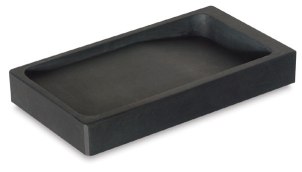
Sumi ink stone

Some people use colors in their sumi paintings, even gold paint, but I currently don’t. At it’s essential core, this kind of painting is about deep black ink, a natural-bristle bamboo handled brush, and some nice paper.

One of the really cool things about sumi painting is that although you can buy liquid ink in a bottle, you can also grind your own. Ink sticks are generally made with pine soot and natural glue. You rub them against the ink stone, with a little water, to make your ink. There’s something very grounding about watching the ink form in your stone.

05414-group-5-2ww-m
Sumi Brushes

Ink stones aren’t too expensive, neither are brushes, and you only need one or two to start. Paper can be pricy but there are cheap options, so this is an easy thing to try. If you decide to stick with it, you can get better materials.

When you are getting started with sumi, it helps to try making different strokes – the direction your brush moves in, combined with the pressure you use, determines what your mark will be. Sometimes you need to plan ahead with your marks, because you have no way of erasing, but if you hesitate you will put down too much paint. It’s good to practice by trying to copy a simple painting, to see how to make the lines and marks.

Sumi ink can also be thinned out to make washes, like watercolor. If you use the proper kind of paper, Japanese Washi, it will preserve all the fine details you have made and the ink won’t spread too much, nor sit on the surface.

There are, of course, online tutorials, videos, and books to teach you this art, or you can play around and see what you can make on your own. Sumi can even be a form of moving meditation. A common exercise is to breathe deeply and see how perfect a circle you can draw with a single stroke.

12744-1013-2ww-m

I’ve barely scratched the surface here but I hope you can see what endless vistas can be explored.  If you’d like to try too, click on the images to see where to get the supplies.


(featured picture by Pixabay, art materials from DickBlick.com)

The Magic of Detail

Fox Pond Detail.jpg
A small detail from one of my paintings


Whether we’re talking about a story, an article, a painting, or a drawing, the devil really is in the details. Get them wrong and you have a flop. Get them right and you’ve made something great.

Research is really important to make sure you get those details right. Just how should the knight’s sword gleam? What does a rose smell like, exactly? How does a Great Dane generally behave? What are some of the normal brands of potato chip bought in the East Coast?

Details, and how you portray them, are everything. If you’re writing about an object, the reader should know what it looks like. They need to know the color, make an model of the car the protagonist sees. The scent of the forest as the heroin walks into it. How the fur of the wolf feels as the hero tentatively strokes its ruff.

In a picture, little details can really make it come alive. Say you paint a mountain scene. It’s pretty, but what’s going on? Add a bird, and there’s life. Add a boat and a mysterious head in the high mountain caldera-lake, and you have a story. What creatures populate your woods? Who walks through your cities? What do they wear? How do they live? In a portrait, what favorite piece of jewelry, what sly look of the eye, will the viewer see?

Remember to include these things and watch your viewers, or readers, love you.

Daydream your way to happiness

via Daily Prompt: Pretend

Remember when you were young, and you pretended that you were someone else?  When I was little, sometimes I’d be a bus driver, sometimes a pilot, sometimes a doctor, sometimes a vet, sometimes a detective.

Just as  kittens stalk leaves and toys as imaginary mice, we mold our young brains by pretending.  Fortunately, it’s not entirely that deadly serious, or otherwise I’d be trying for a career as an elevator or trolley car!  However, we can shape our thinking by pretending.

As adults, many of us forget this.  We live our lives, rooted in the ordinary routine.  We might forget to stop and wonder what things would be like if we were other people, or acted in different ways.  We miss out on a rich buffet of possibilities.  Later, we see an opportunity and say “why didn’t I see that coming?  Why couldn’t I have taken advantage of that and live my dreams?”

We can get around this by pretending.

Taking a few moments to let your mind fly free, and imagine every detail about how things might be if circumstances were different can prepare you if things really do change.  Some might do this to roleplaying games, others through guided meditation, but daydreaming can be done most places, in just a few minutes, with no special equipment or partners. It’s also a form of meditation if you allow it to be.

If you take a moment and just wonder, pretend, it might open up doors to opportunity you never saw.  Who would you be if you could be anyone, do anything?  What would that feel like?  Is there something you can do right now that is more along those lines, instead of your mundane everyday?

Let’s pretend.

Contentment

Everybody wants contentment.  They want that quiet, calm feeling that everything is okay.  They want to have enough to get by, they want the right electronics, nice clothes, a good place to live, the right partner, the right job.  Many think those things are the way to contentment.

A person will never find contentment unless they first embody it.  Contentment comes from within.  You can be perfectly content if you are destitute, even if you aren’t sure where your next meal is coming from, if you have mastered yourself and are a source of your own contentment.  You can be happy with absolutely anything if you’ve learned this.

A common thought is that if you are content, you will never try for anything more.  Not so!  People often use this as a reason not to try for internally motivated contentment.  I know I’ve done that.  Being content with what you have still leaves plenty of room for improvement, while at the same time giving you a safe, calm internal place to work from.

How is that done?

Mindfulness meditation is very good for this.  If you take a small pleasant experience, such as drinking a cup of tea, taking a walk, or looking up into  a sunny sky, fill yourself with the whole sensation.  Notice everything pleasant about it.  The true key is, you can do this with ANYTHING.  That knowledge is true contentment.