Better Posture for a Better Life

Has anyone heard this as a kid?  “Sit up straight!  Stand up straight!”

It looks like Mom, or Grandma, had the right idea.  Not only can good posture make you look taller and thinner, but it also improves your ability to breathe, makes you look more confident, reduces your stress level, improves your concentration, and even improves your mood!

Wait, what?

It’s true.

While good posture obviously isn’t a cure-all, it’s an often overlooked aspect to life.  Your body works better when important internal organs aren’t squished, your bones and muscles support you more evenly too.  As mentioned before, you breathe better.  And your brain releases neurotransmitters that make you feel more in control of things.

Slouching can actually sap your energy, while moving your arms can make you feel more lively.  It’s all here in this article from Medical Daily:

Change Your Posture To Improve Your Mood, Memory, And 5 Other Aspects Of Your Life

http://www.medicaldaily.com/change-your-posture-improve-your-mood-memory-and-5-other-aspects-your-life-289724


I’ve actually seen this work.  When I sit up straight and breathe deeply, or walk with my head up and shoulders back, I feel better, more confident.  In this case, mood is affected by behavior rather than the other way around.  When I’m feeling low, I can change my mood by changing my posture.

To me, that’s incredibly powerful.  For those of us who feel stuck in moods, this can be a great way out.

Things I wish I could tell my younger self


I look back on my life so far and there are some things I’d love to have done differently. I know this is true for everyone, but maybe someone younger than me will read this and benefit.

The first thing I’d tell my younger self is,

“Everybody’s human. Everybody is nervous, everybody wants to be liked. Don’t put people on a pedastal. You are as good as anyone else, so take that first step, say hi, reach out. The other person might be as afraid as you are adn want to reach out too.”

I’d also like to say,

“Make sure you spend time learning how to think and learning how to learn. It’s okay to have fun, but try to cultivate interests that might actually be useful. And whatever you do, if you are going to spend time on it, do it well.”

And I’d really love to say,

“Please, please, please, figure out what you want to do for a career, and start preparing for it when you are still in high school. Everyone in college is going to expect you to have basic skills that you should have gotten in high school. But you won’t have them. So if you really want to be a writer, practice all you can. If you really want to be an artist, work hard to be the best you can be. Don’t be afraid of competition. Use it as motivation. Compete against yourself. And make sure you talk to different people in your fields so you find out what it’s really like when you get there. Don’t waste your time in college finding who you are. As time goes by, you will have less time, not more, to do that.”

And finally, I would tell my younger self

“Even if it’s hard, learn how to think. Start observing people. Analyze everything you see. Learn from everyone you meet. Get used to being an eternal student and it will serve you well. Think about how people say things as much as you think about what they say, watch how you do things as much as you watch what you do. Think, think, think. Take control over yourself and give up the idea of controlling others. Don’t take anything anyone says at face value. Be grateful for everything you learn.”

I wonder how my life would be different if I had been told those things in such a way that I would have heeded them?

Responsibility vs. helplessness – “It’s not my fault!”


So many people now are being taught to be helpless.  If you are unsure of what I’m talking about, consider this:  How many times do you hear people blaming others for anything and everything?  Whether it’s job loss, lack of a boyfriend or girlfriend, bad health, bad grades, being late to work, or whatever, it’s never anyone’s fault.  If you, like me, are immediately thinking of exceptions and reasons why, then this idea really deserves some thought.

When you think about it, it’s unhealthy to blame the rest of the world for things.  Not only that, but it leads to continued failure.  Have you seen the kids who get a participation prize whether they win or lose?  As the sting is taken away from the losers, the sting is taken away from the winners.  I know a girl who won a foot race.  She told her dad “it doesn’t matter, everyone got a trophy.”  It’s the same thing with life.  If we blame the world for our failures, who do we credit for our successes?

It’s a lot healthier to find the places we can take charge of our lives.  Instead of blaming traffic for being late to work, we leave earlier or check the traffic online.  Instead of blaming circumstance for our health, we exercise and eat better. What we can control, we do.  When we are in a bad relationship, we managed our own responses so we can deal with the other partner with a clear head.   Even though modern society seems to reject personal responsibility, we embrace it so we don’t have to be so storm-tossed and rudderless as everyone else.

The benefits of personal responsibility can be seen in all aspects of life – love, work, play, finance, health, relationships.  I think it’s useful to think about why personal responsibility is subtly undervalued.  Why would people want us to be so dependent on outside forces?  Could it be because we make better consumers when we feel helpless?  I know I have a lot of thinking to do in that direction.  I’m not perfect, but I have myself to thank for that, and myself to improve.  Even if the media keeps teaching me to blame others, and schooling, and my upbringing, I am a thinking being and I have a choice!

Living at the Airport

12p.jpg


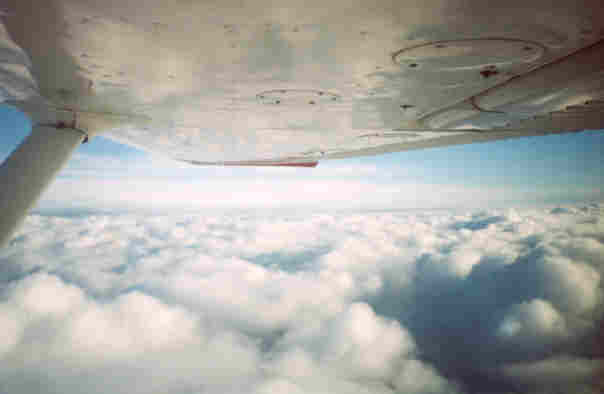
I lived at a regional airport for a year. A nice little place, two runways, some hangars, a terminal that saw only partial use, and only one regular commercial flight going in and out of it. I lived at the flight school where I’d had my first lesson. Why? I needed a place to stay after a stormy breakup with a roommate, and I was friends with the owner.

But what was it like? To me, it was heaven. The Department of Natural Resources Hueys spooling up every morning, the sound of turbines going by, the Fire Patrol birds going out in the morning, the fuel trucks driving by. Watching the flight museum’s P-51 Mustang roar by on Saturdays. I loved walking through the hangar in the morning and saying hi to the three mechanics. I could get up and take a flight in the mornings, using the time I earned working the Hertz desk on the weekends. I also did a lot of volunteer work at the flight museum nearby, helping with events and such. In fact, I soloed a plane before I ever soloed a car!

It was a good life, for a time, where I could just work and live and bank my rent money and spend time with flight students and mechanics.  Eventually I had to really learn to drive, and I bought a house, and I got all responsible and stuff.  I broke away from the owner of the flight school because of some serious irreconcilable differences.  I still treasure those airport memories even though they are bittersweet.

What does Courage really mean?


It takes more than running from a fight to make a coward. It can also mean avoiding confrontation of any kind, or avoiding competition at all costs.  It can mean never taking a risk, not speaking your mind, or never improving what you do.

For example, I have always been inclined to avoid competition, mostly because I believed I would always lose and I couldn’t handle defeat. What I never admitted to myself is that it makes me a coward. I kidded myself into thinking I was not a coward because I didn’t get into fights, so how else could I show my bravery?  I conveniently forgot that I never competed, played dirty tricks when I argued, and at the final test of bravery, when mastering my fear would have given me my pilot’s license, I failed there too. Sure, there were other factors, but social anxiety was my downfall.  It’s no excuse, because as a sapient being I should have been able to override it.

I’m not trying to whine here, nor beat myself up, but rather use my experience as an example to help make my point.

Knowing this about myself, where do I go from here, or where does another person go who has the same realization?  After all, modern society encourages cowardice.  How do we turn that around?

First, it’s important to recognize that fear doesn’t have to be in control.

We all have the ability to choose our actions no matter what our emotion is.

Bravery is a habit that can be built.

We can start small, build confidence, and move from there.

This takes practice and failure is not a reason to quit trying.  If we keep trying, embrace our fears and move through them, we can start to win more often, until we win all the time.

There’s good news, though! Cowardice is not a life sentence, we can free ourselves at any time.


I’ll finish here with one of my favorite poems.


Courage

Courage is the price which life exacts for granting peace.
The soul that knows it not, knows no release
From little things;

Knows not the livid loneliness of fear
Nor mountain heights, where bitter joy you can hear
The sound of wings.

How can life grant us boon of living, compensate,
For dull gray ugliness and pregnant hate
Unless we dare

The soul’s dominion? Each time we make a choice we pay
With courage to behold resistless day
And count it fair.

-Amelia Earhart

Do you feel grown up?

I think that in this world, there are many people who have never really grown up.  I write, of course, from the perspective of someone living in the US so my view may be skewed.  I see many folks every day who have adult roles and have adult bodies yet still apparently feel, think and act pretty much as they did when they were in high school. I’m not saying they are bad people, in fact many of them are very nice, intelligent, and fun to be around. However, I’ve noticed that I have some traits of a superannuated child.  That really bothers me so I’m trying to overcome them and become a true adult.

Modern child psychology claims that a brain doesn’t fully form until you are at least 25 years old.  One person I talked to recently said 35.  My own study and observation tells me that this can be altered with training and practice. For example, think of the adult roles children were expected to take on even less than a century ago. Think of farm kids taking care of animals or raising their siblings, city kids running small businesses like landscaping or paper delivery. Think back even further to pioneer kids who might run a household at 15, or young boys who might go off to war or a sailing ship at 13 or 14.  Those were not easy times, they were full of hardships. Yet those young people had practice with ever increasing levels or responsibility, from their first chores at the age of five or so, all the way up through full adulthood.

In comparison, look at the kids of today, especially in the United States. Many don’t have much in the way of chores to do, many don’t work a job till high school or later. In certain parts of the US, giving your kids chores can get you reported to Child Protective Services! Then they are expected to take full adult responsibility at eighteen. There is little or no ‘ramp’ up to train them how to be adults.  The poor dears are floundering with no idea what to do. Is it any wonder these kids are “undeveloped” and often fall flat on their faces, moving back in with their parents, or never leaving?

I moved out at eighteen. I’d had a couple of jobs and I’d done chores as a kid, so I had some idea of handling money. But I still made some pretty monumental mistakes. And in this modern world, that seems to discourage even adults from making informed decisions, I am moving toward a true adulthood. The road to adulthood is embracing personal responsibility. That one issue, in particular, is a sticking point, as we are trained out of taking it.  “It’s not my fault!” is the oft repeated refrain.  So I’m looking at my weak points, correcting those, and using the example of famous adults from history to motivate me. I’m practicing the fine art of self restraint and delaying self gratification. That in particular is rather difficult. But I’m trying, because it’s important to do that.
Can you think of ways we could better guide our kids towards a full and flourishing adulthood?

A High School Class every human needs to take


Many young people come out of high school completely unprepared for life. I know I was. My folks did their best but there was so much I didn’t know how to do. I couldn’t balance a checkbook, didn’t know how to write up a proper budget, didn’t know how to add air to car tires, and a whole host of other things. Now, much of this was due to my own disinterest in most things that were useful. So again, I’m really not blaming my folks.  I went to an alternative high school and the type of class I am about to outline is something they could easily have done.

I would call the class “Life Skills.” It would cover all the little things that everyone needs to know, but few remember to teach. Here are some of the subjects it would cover:

Basic cooking and nutrition (it’s not just for Home EC students)

Basic money skills, like how bank accounts work, how checks work, how debit and credit cards work, how a credit score works

Simple automotive maintenance. How to tell when your tires are low, what to do if the check engine light comes on, how to change wipers and washer fluid. Simple stuff.

How to rent an apartment, what to expect when bills are due, reasonable expectation of cost, ways of approaching landlords if you have a problem.

Now, the list could go on and on. But it isn’t difficult to imagine a Life Skills class like this. It could cover a lot of the simple, basic things that make life so much easier – those things we may or may not get from our parents, or that we may not be receptive to when someone tries to teach us. I think our kids would be a lot better prepared for the world with a class like this. It would sure be a heck of a lot more useful than “Global Citizenship” or rot like that.

Would a class like that have been useful to you?

Your Defense against Snake Oil

When you are looking for alternative therapies and treatments, it can be a real pain to tell the scammers from the real deal.  So many people make a living by preying on the unwary. It’s tough to avoid being fooled sometimes, so I wanted to offer a few basic guidelines to help you separate the wheat from the chaff. \
Rule number one: Distrust intangible products.

Rule number two: Distrust all quick cures.

Rule number three: Don’t trust testimonials.

Why do I say not to trust testimonials? Because they create false confidence. It’s hard not to be swayed by reading letter after glowing letter about how that miracle cleanse cure fixed their horrible problems with gas, and their pictures of the parasites they passed. Keep in mind that the letters are faked and those nasty pictures are just mud dipped strings dropped in a toilet. People lie. They lie a lot more when there’s money involved.

In general, be cautious with people treating conditions like cancer, impotence, skin problems, and other things that are difficult or expensive to treat. They prey on people’s fear and they offer false hope in exchange for low, low payments of $49.99 or whatever the case may be. Ultimately, it would be smarter to save that money and spend it on whole foods and healthy living.

As I said in my rules, run away, far away, from anything promising a quick cure. Neither cures nor getting rich happen quickly. Just like success, usually a cure requires work and dedication. Of course, it depends on the condition. You will see this a LOT in the field of weight loss. People will promise anything because they are counting on people being so dazzled with the promise of losing ten pounds a week that they won’t notice what’s going out of their wallets..

If you don’t already believe in them, run away from anything involving crystals, magnets, pyramids, positive vibrations, or light. Run away from anything related to homeopathy.  If you believe in these therapies, that’s your decision – but for pity’s sake, don’t pay much for it! That’s what I meant by people selling intangibles. Homeopathy counts as an intangible because it’s all just distilled water. Look it up, it’s true.

On the other hand, not all natural cures are bunk. Naturapaths, for example, can do amazing things with the right treatments, which can include supplements of various kinds. They have a lot of medical knowledge and use it well.

Speaking of supplements, some of them can really be great. Some of the old reliables are kelp, omega-3 fatty acids, Vitamin C, E and A, iron, and good foods like cranberry,  tree nuts and fish. The list is long and doesn’t need to be repeated here.  In general, whole food is better than pills, but liquid vitamins are best if you have to take them. Capsules are better than tablets if you have to absorb something.  Don’t forget that some vitamins and minerals require fat to be absorbed properly.  The best vitamins, minerals, and other supplements have good amounts of research behind them.

For example, you can actually find good evidence that turmeric is an anti-inflammatory, garlic helps with viruses, and peppermint helps with asthma and stomach problems. There’s lots of research on ginger, ginkgo, ginseng – the list goes on.

The more educated you are, and the more you understand the psychology of selling, the better you will do in helping yourself as well as avoiding scams.

Surprising Benefits of Handwriting

Did you know that writing by hand, rather than typing or printing, might actually help your brain?

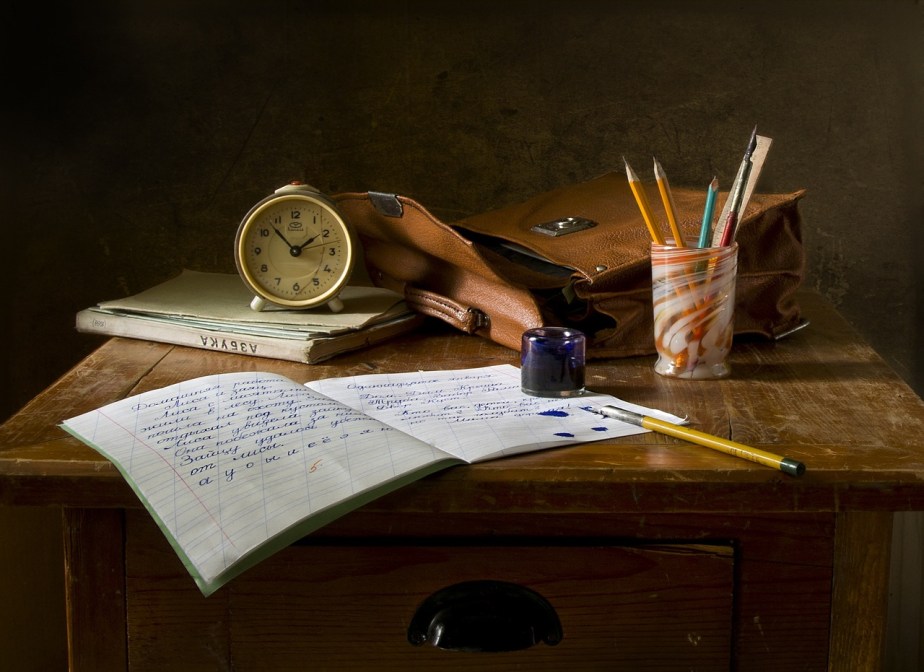
I recently read about a study that was conducted on kindergartners. In learning, the kindergartners who wrote during a learning activity had more active, adult like brain patterns than the children who didn’t. The same researchers looked at adults and found that not only did adults who wrote have more brain activity as well, but it was of a different kind, and apparently more beneficial, if they wrote in cursive rather than printing or typing.

There’s another benefit, too.  Cursive, or is that cursed-at? and even the dreaded Palmer Method or later D’Nealian Method, is designed to reduce hand fatigue.  It’s meant to help you write a longer time with better legibility, while still making your handwriting look elegant.  I’ve found this to be generally true, depending on your taste.

This is why I have started to write more letters and in my diary again. I also practice my handwriting with inspirational quotes or whatever poem I am currently memorizing. I find that handwriting puts me in a much more meditative frame of mind than when I print or type. I also find that my words tend to be a bit more poetic and eloquent, as if the beautiful letters demand more beautiful words to go with them.

As old fashioned as it may be, I am having fun with this and am really curious to see where it will go.

What is your Purpose?

A good friend told me once that if you know your purpose in life, if you know why you are here, then you will have an easier time staying healthy. You will, in effect, have a greater will to live because you have something to live for.

Some people live for their craft, others live for their children, others for their pets, others for their family. I am still trying to decide why I am here. In part it is to help others, and in part it is to do art – but what kind of art?  Sometimes I seem to lack that fire that gives me passion. I think that is from lacking purpose.

I’ve had trouble with this for a long time.  I just have such a hard time choosing!  It helped to think about the things I did first.  And those things were art, and reading, and wanting to help other people.  If those were my instincts at two and three years of age, perhaps they are important and central?

When I created a list of core values, that helped.   Even just acknowledging why I am here in this life helps me improve, as well as embracing it fully. My friend said that he was 80% certain he was here to heal people, and so he decided to make that 100%. I liked that. It showed that he ws choosing to commit to something. And that is a good lesson for me. I can choose to commit to a purpose, even though I’m not 100% sure.

It occurs to me that this will also help you be happy, as well as healthy.  Having a purpose gives a person not only something to live for but a reason to feel satisfaction in life.  Making a list of those qualities you value most in yourself and others will help cement this.  Ask yourself “if I could do anything, what would I do?”  Then ask, “What are the important elements in that?”

So there. I’ll turn 80% to 100% too.  My purpose in life is to make art and also help people.