Minimalism is a Mindset

A person can donate all their possessions to charity and still end up with a cluttered home within a year unless they change their mindset.

I have had to give up most of my things several times in my life.  More than once, I’ve had to fit everything I owned into a carload.  I was good at finding things at good deals, so I’d always end up with twice as much stuff within a few months!  A lot of my security came from having stuff.

This started to change when I had to drive across several states with only the things I could fit on and in my Hyundai Elantra and it’s home made roof rack – including bedding, tent, sacks of dried rice and beans, clothes, spouse, and two cats.  After that I never wanted to have too much stuff again.

The stuff crept in again but not as quickly as before.  I started to focus on quality rather than quantity.  When I had to move one more time, I had better resources for moving everything but used that move as a reason to rid myself of more dross and replace it with more good quality items.

I can see the effect of my mindset changing – smaller spaces look larger as I have less furniture.  I have more time in my day because I don’t have to organize things.  I can find everything easily.  Once, I was famous for always losing things.  Now, I know where everything I need is, right away, and I find it the first time.

Life is a bit more satisfying as I move from plastic to glass and metal and get rid of disposable things around my home.  I feel more settled.  As the things I use grow fewer in number, but more beautiful, my life feels more like art rather than common drudgery.  I haven’t had to spend a lot more money to do this, but I have had to be intentional about my purchases and choose quality over convenience or quantity.  I still have a long way to go.  However, my changing mindset has brought peace to my life and home!


via Daily Prompt: Minimal

https://dailypost.wordpress.com/prompts/minimal/

Avoiding Controversy: Advice for Transsexuals

I was at a public event recently and saw several transgendered people. I shouldn’t have been able to spot them so easily but they made it really obvious. It made me think. Two in particular made very little effort to pass as female. They drew attention to themselves, stuck out like sore thumbs and sadly, looked like drag queens rather than women.

A transwoman is a real woman – according to her brain structure, that is. She’s trying to make her body and public image match how she feels inside. At least, she should be.

Too many transwomen seem to think they need to make a spectacle of themselves. Apparently certain individuals feel a need to be “loud and proud” about their transition. They often make little to no effort to truly pass as female.

They speak with loud, deep voices, they stand facing the toilet in the bathroom, they wear eye catching, loud clothing. They wear high heels even when six feet tall. They use vibrant, often badly applied makeup. Sometimes, some transwomen will think they can still wear jeans and traditionally masculine clothes. They try to wear a dress while they are sporting five o’clock shadow and no make up. All these things catch the eye and make their status obvious, when a little effort would avoid these problems.

Unfortunately, there are very serious consequences to their actions. Transwomen who don’t try to pass aren’t just making decisions for themselves, they are affecting many other people too. To put it bluntly, irresponsible transfolk draw negative attention to the community, and may even cause people to be beaten or murdered.

Consider the following scenario: There are several people who were born male but are making their best effort to fully become women. They work hard to pass as women. They moderate their voices, they dress in a feminine way, they act in feminine ways. They simply want to live their lives quietly, as women, and give no one any trouble. They don’t call attention to themselves, spending their time working, playing, and being normal people.

Picture now, in this scenario, what might happen if a masculine looking person who is six feet tall with a deep voice walks into a room with them. This person is wearing high heels, bright makeup, a badly stuffed bra, and is looking like a drag queen. She’ll probably freak out those who are intolerant, hateful, or fearful. She might even incite violence. At the least, she’ll inspire plenty of nasty comments. She’ll also draw attention to any person around her who is also sexually ambiguous.

Hypervigilance toward gender differences can lead to tragedy. It causes masculine looking women to be beaten and thrown out of bathrooms, as you can see if you’ve followed the news. A very poorly passing trans woman sensitizes bigoted individuals, pushes the issue into everyone’s faces, and frightens the intolerant into even more hypervigilance.

A transwoman who is busy “following her own bliss” and doesn’t take care with her appearance or actions not only puts others in danger, gives the entire community a bad name. They make people think all trans folk are drag queens, clowns, or circus side show acts. It’s very hard for someone such as myself to say “trans folk just want to live normal, civilized lives and blend in with society,” when there are so many six foot tall, inconsiderate, poorly passing “women” who think that it’s all a lark and figuratively jump up and down shouting “look at me! I’m trans! I’m trans!”

For women who truly are trying to transition, it isn’t a game for them, nor is it a joke. It’s a deadly serious choice between a painful, difficult, expensive process and inevitable suicide. Transwomen who make it all the way through gender transition have gone through more struggle and heartache than almost anyone else in the world. It takes tremendous courage and determination to be successful. The public perception of transition as a simple surgery is woefully inaccurate, in actuality it takes at least a year, including intensive counseling and hormone treatments.

If you’re trans, I cheer for you. If you support trans folk, I’m with you all the way. That’s why I wrote this article. I care about the trans community and I want everyone to be whole and free to achieve their own goals. We will never be free of hateful people, they’re everywhere, so why not do what we can to help each other and help ourselves at the same time?

Helpful tips:

For any transfolk who want to pass more successfully, I’d like to offer the following advice. I got it from friends of mine who are successful transwomen.

For the successful transsexual, the goal is to blend in to society.
The more gender cues you can display, the better. This is true no matter what direction you are going in, whether male to female or vice versa. Sometimes someone might spot you for one thing, such as a deep voice, but still decide you are bio female for other reasons – presence of breasts, wearing a skirt or dress, well applied makeup, etc.

Stay neat and clean. Bathe, groom yourself in a way that is appropriate.

Choose good role models. If you’re a man, don’t try to look and act like a low class thug, if you’re a women, don’t try to act like a cheap hooker. Transmen: Don’t be Al Bundy. Transwomen: Don’t be Peg Bundy. Instead, why not emulate people with real style and class?

Dress appropriately. Wear clothes that are classically masculine if you are a transman, or classically feminine if you are a transwoman. Don’t bother with loud designs or ambiguous clothing. No skinny jeans or stretch pants for a transman, no blue jeans or sloppy sweat shirts for a transwoman. The idea is to give people a good impression, with clear indications of what gender you are. Avoid loud, clashing fabrics or extreme styles. Go for a sylish but somewhat conservative look. Avoid extremes. Strive to be a lady or a gentleman.

Speaking of style and class, try always to be courteous and respectful to others. Not only will you be treated better, but even if you are spotted as trans, you will be a good ambassador for the rest of your community. Also, being polite doesn’t mean being a pushover. It means being assertive without being aggressive, and respectful of others.

Learn the skills appropriate for your gender, even if it’s a bit stereotypical. People sometimes rely on stereotypes to guide them though ambiguity. While a transwoman can retain any skill she had before transition, she should at least know how to talk about subjects regarding cooking and homemaking for example. A transman would do well to understand something about fixing things, building things, how a car works, and enough about sports so as not to appear a fool. In either case, research the things that everyone in your gender seems to know, and know them too. Besides, it can be a great deal of fun!

Do things the way others do, especially in the bathroom. If you’re a transman, don’t leave tampons around. If you still need them, be discreet. If you’re a transwoman, don’t face the toilet, but sit down to pee. If you have a hard time doing that, spend some quality time at home with a case of beer or other diuretic beverage and train yourself.

Never be a caricature. Stay balanced. When possible, take your cues from bio men and women, not other trans folk.

Alter your voice to match your gender, but don’t go overboard. Transmen, just deepen your voice a bit and use masculine word choices. Transwomen, don’t go falsetto. Instead, soften your voice, raise the pitch a bit, not the volume, and strive for smoothness. Always pay attention to what you are doing and how you are doing it. It does get easier with practice.

To all transwomen: I can’t emphasize this enough. You aren’t transitioning to become a transwoman or a drag queen – you’re transitioning to become a woman, in body as well as mind. Since you have the chance to remake yourself, why not be a lady, not a diva?

via Daily Prompt: Controversy

https://dailypost.wordpress.com/prompts/controversy/


Luck of the Scottish – Glynda Shaw, Authoress

Welcome to another Friday Feature.  Today we have Glynda Shaw, who has written several rather interesting books.  We have both a Q&A and a short bio at the end.  Glynda, welcome to Mindflight!

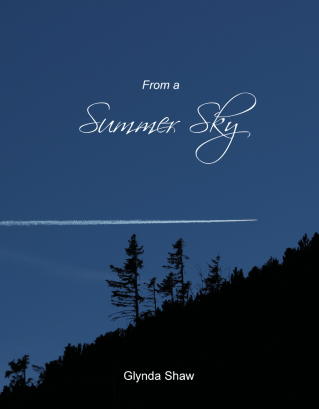
How do you get inspired to write?From a Summer Sky cover 900.png

I think the thing that most inspires me to write is in reexamining my past life, I see times when things could have gone some other way or characters chance met, who may have played a greater role in my life had things been different. Rather than having a message to put across to readers, I like to create situations and characters, often based in true life and are interesting to me. Having done so, it’s great fun to see if others find them interesting and worth remembering.

What’s the best thing about being a writer?

The best thing about being a writer is watching something come out of nothing. Writing is truly magical in for that reason.

Though we spend a lot of money on computers and other assorted contrivances, the writing process itself is imminently portable and can be accomplished, (if sometimes laboriously) with any number of implements and on everything from silicon chips to a cave wall.

Writing is to the mind what potter’s clay is to the fingers.

Where did you get the idea for your most recent book?

I got the idea for my most recently published book Experimental College My Summer in Serendip, in the following way. It had two sources actually. I once had a roommate in college who could have possibly become more, but didn’t.

I’d wondered over the years what might have happened if things had gone differently. I also had been playing with a concept of a young, somewhat effeminate man, being attracted to a somewhat dominant male of similar age but greater experience. I imagined the less experienced guy getting advice and support from two women, themselves a couple, who lived next door, down the hall or otherwise nearby, in a dormitory situation.

What started out to be a sexual romp, perhaps with kinks, turned into what I hope is a thoughtful examination of how interests begin and end between people of various genders and how we all have the need to know parts of ourselves which have remained hidden throughout the turmoils of maturation.

Experimental College Cover 900.pngHow do you deal with writer’s block?

I’ve found a good way to deal with writer’s block is through talking with myself. Since I’m an introvert I do this on paper or more precisely, on silicon. In my personal journal I essentially ask myself what have I written about before then what would I like to write now.

When I have an idea I go on to ask myself what sort of characters do I want to introduce, in which person do I want to write; things like that.

Once underway, if I get stuck I talk with myself about a given scene or plot issue, what am I trying to accomplish here? Why is this person acting that way? What are some ways in which this situation could resolve?

Strangely enough, talking to myself about stuff I already know very often helps me discover things I didn’t think I knew (or maybe it gets a muse whispering into my ear), and I almost always come away from the process with more ideas than I had initially.

What’s your advice for aspiring writers?

My advice to aspiring authors is to Practice.

You can’t play the piano just by reading music books and you can’t do math unless you actually work problems.

Samewise, to write you must write. Write letters, poems, your thoughts, descriptions of things, even silly stuff. Mother hung my sister’s prom dress in my closet. Is she telling me something? Or I just found that between 2:00 and 3:00 PM, my back door opens into someone else’s house! Don’t be afraid to rewrite, in fact you might try telling a story two or three times from different perspectives.

Try to keep some kind of writing schedule. Put a certain number of words down on paper every day or three times a week or whatever schedule with which you feel comfortable. Lastly, don’t worry whether or not you’re smart enough to be a writer. Somebody of average intelligence who writes every day has it over the genius who just never gets around to putting down thoughts because there’s always so much else to do.

Besides, in my experience someone who wants to write, likes to write and actually does write, usually possesses an active mind. Your brain is a muscle and writing is the best mental calisthenic of which I am aware!

What are you currently working on?  Secret Summers Cover 900.png

 I’m working on a science fiction/fantasy novel with strong relational content, called Touching the Void Between.  It involves a blind boy who has lost his twin sister.  He is sent to a residential school to get him away from what his mother feels is an unhealthy environment at home.  The spirit of his twin appears to have accompanied him and a psychic house parent together with a shadowy group of Goddess devotees help him deal with the reasons his sister needed to return.

Thank you for joining us, Glynda!  Here’s a little more about her, if anyone is interested in learning about her and her books.

Glynda Shaw is a Seattle native, an aerospace engineer, a social worker, and an experimenter in alternative energy and biosystems.

“Currently for different reasons, I especially enjoy reading the novels of Patricia Cornwell, Tess Gerritsen, Mary Downing Hahn, Lisa Jackson, Lee Child, John Sandford, Lisa Unger. There are many others of course but those are the ones I drop everything to read when a new title appears.

Throughout my life I have enjoyed and respected Poul Anderson Isaac Asimov, A Bertram Chandler, Arthur C. Clarke, Robert Heinlein, Howard Pyle, Mark Twain. More recently; Stephen Baxter, Bernard Cornwell, S. M. Stirling and of course always, Robert Louis Stevenson.

I also read a fair amount of history, technology and science. Charles Sheffield, Freeman Dyson and Gerrard K. O’Neil and probably my current favorite writers of speculative technology.

Between Lines Book Cover tiny.pngMy writing influences are varied and include feminism, gender issues, the fact of my own blindness and cultural issues,including my Celtic background and a love of the Pacific Northwest and also of the American South. Most of my life a seem to have been a very small minority yelling about something or other and not always winning but generally remaining on my feet.

I try to root my stories in places I’ve been and can describe credibly. I’ve been known to take vacations places so I can get the setting right. I like to show my characters making independent decisions and creating lives that fit them even if not acceptable to all of their neighbors.

Those are the sorts of people I tend to like also; folks who know stuff and aren’t afraid to ask the questions “why not?” and “Why do things have to be this way?”

I like to champion things that are old but still good but also new things that are good but not just because they’re new and trendy. One of the most charming images I can think of, the author of which has been lost to my memory, was that of a young woman on a horse, surrounded by a force field actuated from the saddle; and she able to tesser from planet to planet, having extraordinary adventures.”

Join her on Goodreads, her website and blog, or on Pronoun.

via Daily Prompt: Luck

https://dailypost.wordpress.com/prompts/luck/

The instinct for nonviolence

Nonviolence doesn’t settle anything.

I used to be a pacifist. That’s what I called myself, anyway. I thought all war and conflict were bad. I avoided disagreements like the plague and prided myself on the refusal to fight. At the same time, I didn’t really have a cause I believed in. In my case my beliefs were based on cowardice. I allowed my instincts, my fear of conflict to override anything I valued. It weakened me terribly.

I wasn’t really a pacifist. After all, true pacifists have to be very brave and strong. Think of Gandhi and everything he faced! I didn’t truly believe in peace. Instead, I feared conflict, and I feared it because I hadn’t learned how to properly deal with it. I believed that walking away from a fight was the best option, because that allowed me to avoid facing my fear.

Running away from my fears led me to run away from everything else – any lesson that wasn’t easy, any challenge that was hard. My mental muscles atrophied in certain ways. Fear really had me in its grip – I hadn’t learned to face it, so in effect my fear was more important than all my goals, my dreams, my aspirations. That eroded my self confidence and even my self esteem as surely as water washes away sand. Because I was too afraid to stand up for myself, I proved to myself that I didn’t have value. It also led to a lot of feelings of frustration and powerlessness, which in turn led to angry outbursts. I also felt completely worthless.

Have you ever seen a small dog that snaps at everything? Sometimes they are called a “fear-biter.” Their own perception of powerlessness can lead them to attack everything indiscriminately. It was the same with me. When I grew angry enough, I didn’t have control over it. My fear would lead first to pacifism but then to thoughts of violence.

As I slowly learn to face my fears and deal with my worries, I find it easier to have goals and aspirations. As I stand up for myself by being assertive rather than aggressive, I show respect for myself as well as those around me.

If I can imagine defending myself or a loved one, I prove to myself that I have value and so does that loved one. If I value my own life enough to save it, my feelings of worthlessness are dispelled. We protect what we value, and we value what we protect. Letting fear take over and cause a pacifism without true conviction says “I value nothing.” That is why nonviolence settles nothing.


https://dailypost.wordpress.com/prompts/instinct/

via Daily Prompt: Instinct

A Wish For Tree-Caves

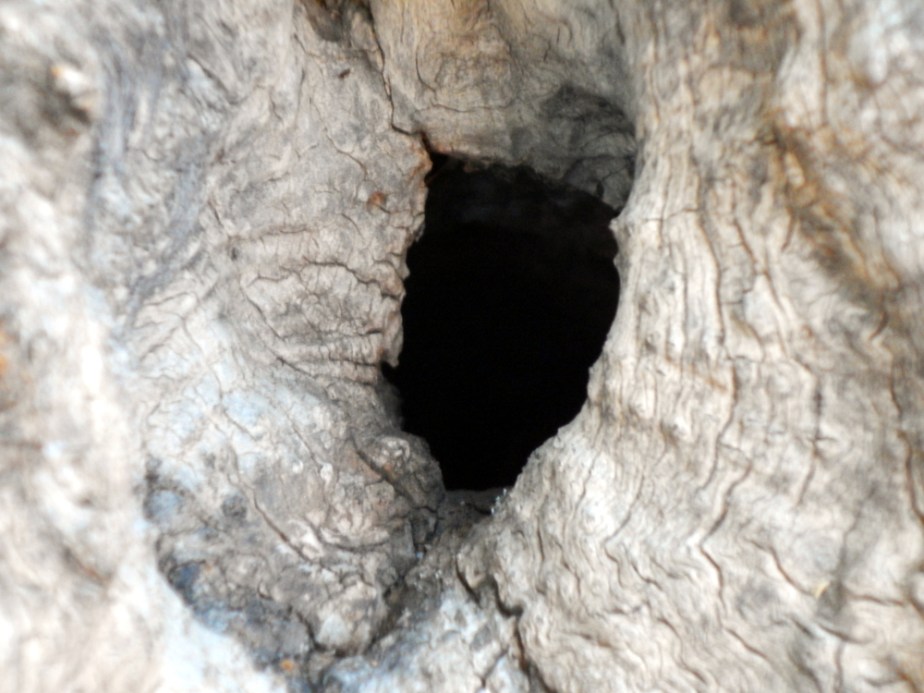
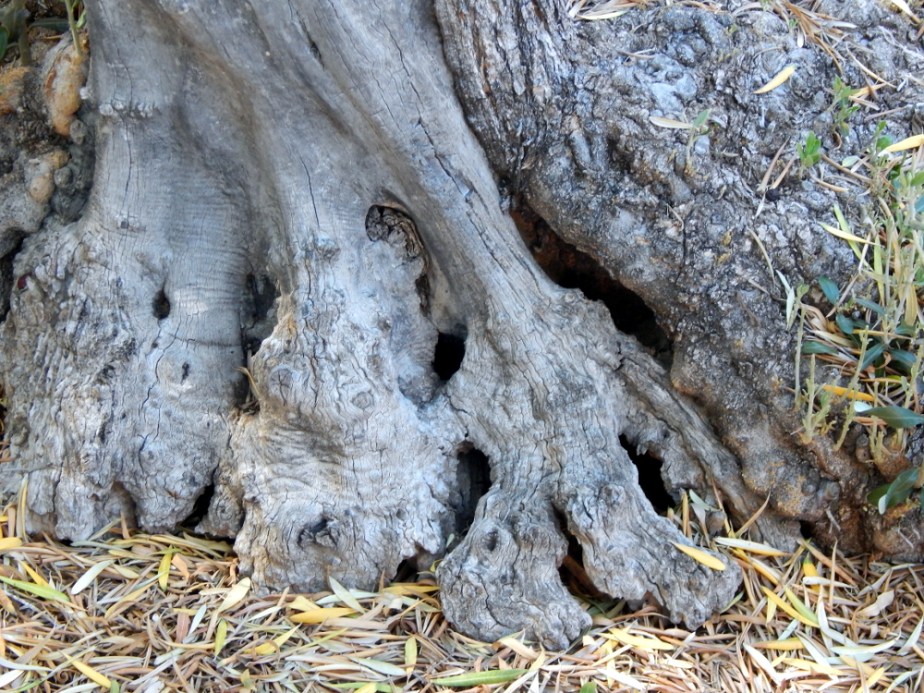
In my backyard, there is an olive tree.  Half dead, the live portion is supported by the barkless portion and enjoys luxuriant growth.  In the base there are holes where lizards live.  It looks like such an interesting place to explore if I were tiny.


olive base 1000

The rock lizards live here, and breed, and come out to eat bugs and do pushups in silly looking displays of dominance.  If I could be tiny, it would be an amazing place to explore.  I’d need ropes and a helmet for these fascinating caves, though.

olive base 2 1000

Yet, were I tiny, I’d also have to be careful.  Those lizards would be strong, like dragons of yore…

olive base 4 1000

After all, what if I encountered something like this when I was only three inches tall?

lizard-1000


https://dailypost.wordpress.com/photo-challenges/wish/

Murmurations of Art

Mindflight is, above all, a site for artists.  I recently had a short discussion about what “Life is Art” means.  Being in a philosophical mood, I started thinking about it.  A fellow blogger and all around cool person, StreetPsychiatrist, said “just imagine if one could infuse art into the most mundane of activities… that would be something of a masterpiece.”

I agree!

I started thinking about all the ways art has been incorporated into daily life across times, across the globe.  I recalled aboriginal dot paintings that are beautiful but tell how to find water holes.  I thought about beaded bags and knife sheaths among the natives of the American Plains.  I thought about the delicate laquerware of old Japan, and the paintings on their paper room dividers.  I thought about the beautifully turned furniture of Victorian England.  I thought of murals in my own city.  I thought of tea ceremonies and singing during work.  Art has murmured throughout people’s lives since humans started walking across the savanna.

Art is everywhere.

It might be that today our art is mostly of the commercial kind.  A lot of thought goes into every plastic product that we use.  However, our disposable life often makes many (myself included) forget about the possibilities to incorporate just a little more art into our daily routine.

It’s easy for me, I’m an artist!  My instinct is to adorn.   I know not everyone is the same way, though.  What should a person do if they don’t feel like they have an artistic bone in their body but wants more art in their life anyway?

Plenty!  People can collect art, whether original or copy.  They can do something as simple as picking out a really inspiring wallpaper for their desktop.  A friend of mine has Van Gogh’s Starry Night as her tablet cover.  They can also collect beautiful things from bygone eras, where there was more care taken in design.  They can incorporate those things into their daily lives.  My mother collects hand painted china.  I have just started collecting antique pocket knives.  For me, restoring those old blades to a new life is another way of inviting art into my world.

Using older, more elegant or interesting items is not only fun, but it also helps reduce modern waste.  So, if you have time and inclination, why not haunt the second hand shops for that perfect blue glass canister to hold your spaghetti noodles in?  Or find a fine old wooden plate stand to support your tablet or phone?  Or learn to make art, some kind of art, to enliven your daily round?

Life is Art.  It’s also an adventure.  Adventure calls!


https://dailypost.wordpress.com/prompts/murmuration/

via Daily Prompt: Murmuration

Interview with Annie Arcane

Annie Arcane author photoAnnie, thank you for stopping by my corner of the internet.  Though romance isn’t my usual genre, I appreciate the unique spin you have on it and what you try to do with your work.  You’ve done something few authors have, put a fresh new spin on an old idea and most of all, made me laugh throughout this interview!

1. In general, what type of books do you write?
Well, I’ve only published adult contemporary romance so far but since I write everything I love to read, you can most definitely expect some dark romance in the future. The very near future. Hint, hint. Oh, I also whip up a flash fiction online each week for my readers and have made all of those into an ever-growing book too. Does that count? It does? Yay!!

2. What is your general theme?
Wounded/damaged alpha heroes with a healthy (or unhealthy, depending who you ask haha) dose of angst.

3. What drew you to that genre and theme?
Honestly? I haven’t a darn clue. I’ve pretty much been writing disabled heroes for as long as I’ve been writing romance. Which has been since for-ev-er ago.

With that said, what draws me to the genre now is how under/misrepresented PWDs are in fiction. I love the challenge of writing disabilities accurately AND keeping it sexy at the same time. I just wanna murder all the stereotypes, ya know? My longterm vision is to collaborate with related charity foundations and increase awareness with my writing. The Wounded Warrior Project is first on my list.

4. If you could give a message to all your readers, what would it be?
Thank you, thank you, and thank you.

I have the best readers ever. Yeah, I realize all authors say that about their readership but mine is seriously, legitimately, unequivocally THE BEST. I’m both grateful for and humbled by their crazy support. Like, let’s be real here, shall we? I’m a complete unknown who’s done everything herself and not all that well either haha! So, yeah, I owe everything to my readers.

5. Since our readers are dying to know, tell us a little about your background.
Ah, the boring stuff…

Hmm. I’m a Vietnamese-Canadian with a B.Sc. in Biology with a minor in English. I work in the fitness industry and am a total tomboy. Shooting guns? Rockclimbing? Driving/modeling import cars? UFC? Yes, please! I’m also a self-proclaimed nerd. Disney? Anime? Crunching numbers for no good reason? Just hook it up to my veins, baby!!

6. What made you realize you could write?Hart Broken
Huh? Whoever said I could write?

Kidding. I can’t remember a time when I wasn’t writing. I was obsessed with R.L Stine when I was a kid and ended up running out of Fear Street books to read the summer I was 9 years old cuz, well, I’d read them ALL. So my sister, who’s 11 years older, took me to the public library, introduced me to my first romance novel (Silver Angel by Johanna Lindsey) annnd…

A romance-writing monster was born. Dun dun dun.

7. How hard or easy was it to write your first book?
Very, veeery easy because I never intended to publish at all.

Yeah, I’m totally an “accidental” author. I literally sat down one day in 2015 and started typing up this story. No outline, no gameplan, no direction whatsoever (I believe the official term is “panster”). About 8 weeks later I was like, “Huh. I’ve written over 40K words. Maybe I should share this crap somewhere, eh?” So with the help of Google, I found an established fiction blog and started serializing chapters. A few weeks later, I moved to my own site cuz…reasons. Okay, fine. I’m a full-fledged control freak. Don’t judge me. Unless you want to.

Anyhoo, by the time I finished Queen of Harts (original title for Hart Broken) roughly 9 months later, my very humble following of insanely loyal readers asked me to release an ebook version for them. Well, I absolutely adore those buggers and can never say no to them so 3 weeks later…

Voila! A (poorly edited) book was born!!

Hart of His8. What advice would you give to someone who wanted to write one?
To quote a multi-billion dollar corporation? Just do it. Thanks, Nike!

Seriously, though, I’m a shoot-for-moon-to-land-amongst-the-stars type of person and tend to leap before I look (no typo). While I admit that being impulsive and reckless has gotten me into trouble before, it’s also opened so many doors in my life. Writing has proven to be no different in my limited experience.

9. Is there one thing in particular that inspires you more than anything else?
Hmm, I don’t consider myself a very “inspired” writer, which sounds pretty bad, eh? But to actually answer the question, I draw a lot from real-life experience. Take my first book, for example…

Mickey is me in a nutshell right down to her personal style, weird quirks, bad habits, and tomboy hobbies. Emotionally, Cale is pretty much every man I’ve ever loved in my entire life all rolled into one. He’s an self-made alpha male with a chip on his shoulder who’s vulnerable for only one person – his woman. Yep. That’s my men. Physically, Cale is still based on my men from the waist up, but from the waist down…

Cale is based on the four paraplegics who were sweet enough to answer all my disability-related questions. And since I’ve never actually been with a disabled man myself, you’d better believe I did a ton of research and asked a ton of highly inappropriate questions.

*shifty eyes*

10. Do you have any tips for overcoming writer’s block?
Well, I’ve never experienced writer’s block in the traditional sense since I’m the master of brain vomit and can whip up a random scene on demand. No joke. My only guess is to keep on writing even if it’s something totally irrelvant to your WIP. Yeah, I’m not very helpful. Meh.

11. If you could choose a legacy and be remembered by something, what would it be?Hart of Hers.jpg

I’ve worked with a ton of charity foundations through my fitness company and plan on using my writing to do the exact same thing.

A charity foundation for disabled children in 3rd world countries is on the horizon. I don’t need to be remembered for it but I sure as heck want it to continue on after I’m dead and gone.

12. What is your latest book about? (feel free to be as detailed as you want)
Author: You wanna answer this question?
Cale: Sure. It’s all about me.
A: (laughs) You’re so full of yourself.
C: (shrugs) You asked.
A: Isn’t the book about Mickey too?
C: (frowns) Yeah, but I don’t like sharing her.
A: Even with readers?
C: (shrugs again)
A: You’re a bit too possessive, buddy.
C: Hey, you wrote me that way.
A: (giggles) True enough.

13. If people want to learn more about you, where can they go?
I can be easily stalked on my author website, http://www.anniearcane.com. I’m also known for being the most approachable author ever (no exaggeration) so people are welcome to contact me personally as well. I read and answer every single email, so yep! Contact away!!

14. What’s the secret recipe for indie author success?
Limited amounts of sleep, a regular coffee drip (black with a touch of vanilla powder), and lots of cookies. Lots and lots of cookies.

Okay, I don’t consider myself “successful” yet. Just wanted to talk about cookies.

SOCIAL MEDIA LINKS:

Website: https://www.anniearcane.com/
Books page: https://www.anniearcane.com/books/
Amazon: http://amazon.com/author/anniearcane
Goodreads: https://www.goodreads.com/anniearcane
Facebook: http://facebook.com/annietheauthor/
Twitter: http://twitter.com/annietheauthor

BOOK LINKS:

Cale & Mickey Series
Hart Broken, Book 1: https://www.anniearcane.com/book/hart-broken/
Hart of His, Book 2: https://www.anniearcane.com/book/hart-of-his/
Hart of Hers, Book 3: https://www.anniearcane.com/book/hart-of-hers/
Hart of Mine, Book 4: https://www.anniearcane.com/book/hart-of-mine/

FREE Book
In a Flash: https://www.anniearcane.com/book/in-a-flash/

100% Proceeds to Charity
Dare to Love: https://www.anniearcane.com/book/dare-to-love/


In a flash.jpg

The Nuances of Indieworld – Interview with Julie A. Gerber

Julie author photoToday, we have an especially interesting interview.  Julie A. Gerber is founder of Away We Go Media and handles social media management and consulting for authors.  I had a lot of fun finding out more about her!
When did you first know you wanted to be a writer?

I never really thought I would be a writer. I wrote things throughout my life and I even had things published in local newspapers. I was having fun, but my mom always teased that I would be a writer someday. I still consider myself more of a social media assistant that works for writers instead of an actual writer. I have coauthored two books. Maybe after I write my first solo book, I will feel more like a writer!

When and how did you finish your first book?unnamed (1)

I published my first book, Tortured Souls: The
House On Wellfleet Bluffs, with Linda Cadose and M.M. Hudson through Createspace. We completed it last year.

What made you want to help authors, and how did you get started??

Back in 2008, soon after my youngest was born, I began a blog. My family was going through a hard time. A tornado hit us. Contractors hit us harder and destroyed our house. We lived in a house my parents owned and went out of pocket to gut our house and put it back together. We didn’t have money for birthdays or Christmas. We didn’t always have enough food or clothes for our kids. Instead of asking for help, I decided to get creative and I learned how to build a blog, review products, and build a following. It wasn’t long before authors began finding me, asking me to feature their books. One of my clients asked me for help and then another followed. Pretty soon, I had a small client list and discovered a huge need in the author community. It grew, and so did my knowledge and experience.

If you could tell authors who want to be successful anything at all, what would it be?

You have to keep writing, but if you don’t balance that with promotion and building relationships with your fans, you will not reach your potential. Every author wants to sell books. I’ve found that a lot of authors think all they have to do is write and eventually the readers will follow. Unfortunately, it just doesn’t happen that way. If you don’t invest time in marketing and building relationships, you are missing a huge opportunity. Marketing doesn’t have to be expensive if you are smart. Learn from other authors and discuss ideas.

What is a long term goal of yours?

My long term goal is that one day, the Navigating Indieworld brand is known throughout the indieworld. I want our brand to be one of the most recognized for indie authors, and the most helpful. I want to expand our reach beyond the writers, and welcome the readers to explore our world.

If you could do anything as an author, what would it be? The sky’s the limit.

I would love more than anything to buy a huge stone house in Scotland or Ireland and spend my days writing books that people can’t wait to read.

Name one thing you wish you had known when starting out.

Let’s go back to my beginning blogger days. I wish, more than anything, that I would have realized how easy it was to build a following. Back in the blogging heyday, you could use giveaways to gain likes and people didn’t fret over terms of service on different sites and platforms. If I had known more about how to build a following, my pages would have exploded right along with the other bloggers from my time. Lesson learned.

What is your upcoming fiction book about?

My current work in progress is loosely based on my great-aunt. She was one of the first female physicians in North Carolina. My character is both dedicated and strong. Her story is about love found and love lost. Through her heartbreak, she finds a new passion in medicine as she begins a journey that will take her to the most unexpected places.

What is the main character like, and what is interesting about them?

She is strong willed. As a child, she was told she had to act a certain way. She was told she couldn’t do things because she was a girl. An unlikely source gave her the push she needed to start on a life changing journey that would take her from the mountains of North Carolina to the bayous of Louisiana and back again. You’ll have to wait for the rest. I hope to release it later this year.

I noticed you co-authored a book called Navigating Indieworld. What is it about?

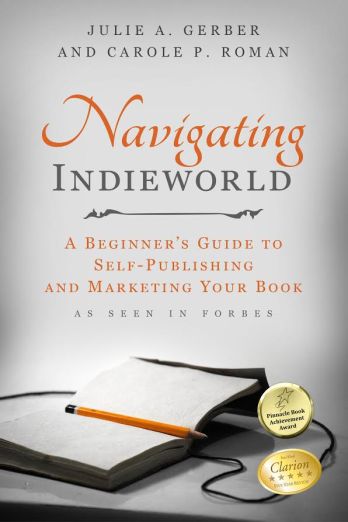
Navigating Indieworld is a tell-all book about unnamedwhat it takes to be a successful indie writer. We start with what to do before you publish and continue with everything that comes after your book is out. Publishing is the easy part!  We break things down in an easy to read manual that tells you the important things you need to know. We give you the scoop on social media and other promotions. We tell you where you can save and what you can expect. The book is not intimidating. It reads like you are having dessert with two girlfriends and discussing writing, publishing, and marketing. There is humor woven throughout, so that makes it a very friendly conversation!

What were the biggest challenges you encountered when writing it?

Providing details without boring anyone to death. It was important not to leave out steps and to make the information easy to read and understandable. We wanted authors to be able to relate to us and the things we did. We tried not to be boring while giving out a bookload of information on writing and publishing. I hope we succeeded.

If readers want to find out more about you and your work, where can they go?

Website: http://www.awaywegomedia.com

Facebook: https://www.facebook.com/awaywegomedia and https://www.facebook.com/NavigatingIndieworld

Twitter: https://twitter.com/Awaywegomedia_

Goodreads: https://www.goodreads.com/author/show/15215458.Julie_A_Gerber

Google Plus: https://plus.google.com/u/0/101471856155148729010

Amazon: https://www.amazon.com/J.A.-Gerber/e/B01EXQSLFW/ref=dp_byline_cont_ebooks_1

Thank you for joining us, Julie!

https://dailypost.wordpress.com/prompts/nuance/

via Daily Prompt: Nuance

Nervous About Asking

Sometimes, I become very nervous when I think about asking questions.  Whether it’s “Can you make dinner tonight?”  Or “Would you like to have your art featured on my blog?” asking a question can be nerve-wracking.

Is it because I don’t think I have permission to ask?  Is it because the great, looming “no” is too hard to contemplate?  Whatever the reason, asking questions leaves me in a cold sweat.

Yet, asking questions is really helpful and a skill that’s important to know.  We gather information through questions, we get things done, we improve our lives and the lives of others through questions.  For me, the way to get through the question is to make sure I’m asking politely, and also think about what “no” means and resolve that I can handle it.

It still takes practice.  This week and weekend, I’ll be doing three author interviews.  That’s a lot of questions!  It’s good practice for asking them.  I do it because it helps fellow authors.  Every day in my job I have to ask questions.  That’s good practice too.

If you’re like me and hate asking questions, it helps to plan out what the question will be, before you ask it.  Make sure it makes sense and is reasonable.  If you do get a “no,” try to see the other person’s side of it.  They may have a good reason for that “no.”  Be understanding.  If you get a “yes,” be appreciative but relaxed about it.  They may not think it’s as big a deal as you do.

Even knowing these things, some questions still give me the collywobbles.  The hardest is “would you do something for me?”  That’s hard because some little part of me thinks I don’t deserve anything.  That’s the part that is truly poisonous, and needs to be starved away by robbing it of energy.  So, I’ll keep asking questions.  Even if I have to tense my gut like I’m about to take a punch, take a breath and push through fear, I’ll keep asking questions.

So, how are you?

via Daily Prompt: Nervous

https://dailypost.wordpress.com/prompts/nervous/

Ruminations about Feedback

As any successful author knows, feedback is the key to quality.

I’ll be perfectly honest here. I struggle to take feedback well. Criticism, even constructive criticism, makes me cringe. I have always had a very thin skin. I’m easily hurt, and my reactions have cheated me out of some very valuable lessons. When I hear something I don’t like, and I feel hurt because of it, I put up a mental wall. Information starts bouncing off as I close my mental doors. I’m not interested in input. Instead, I’m focusing on how much I feel hurt and how I can make it stop.

This has been disastrous for me. I’ve said really nasty things to people because I’ve been so desperate to stop them from hurting me, even when they weren’t really doing that.  It’s never ended well. Then, instead of only one of us feeling hurt, then both of us feel hurt, and the relationship is seriously damaged, all because I hadn’t made the little adjustment needed.

It doesn’t have to be that way. Nobody has to feel hurt. Here’s how I’ve gotten around this over-sensitivity, so that I’ve been able to accept the valuable information that feedback gives. My trick is to shift my focus. Instead of thinking “This person is trying to tear me down,” I think “This person and I are trying to improve this book together.”

In short, I depersonalize. I take the information as important information that I can use to make things better. I give up the idea that my work is perfect in every way from the very start, no one’s work ever is. Editing is a good, normal part of the writing process. I knew a person who refused to change a single line of his work. His writing was terrible! To this day he hasn’t sold a single copy. Don’t be like him.

Feedback is valuable. Embrace it. Whether you take the advice or not, think about it, really consider it. It can be frustrating to edit your book over and over, but it doesn’t have to hurt emotionally. This simple mental shift takes practice to master, but you will have plenty of chances to do so. In the end, you’ll have a book to be proud of.


Via Daily Prompt: Ruminate

https://dailypost.wordpress.com/prompts/ruminate/