Living Blindly

I’ve thought a lot about what it means to  live blindly.   My father is completely without sight, so I know what it means literally.  I do it all the time in a more figurative sense.

You might wonder how I live blindly even though I can see.  It happens when I don’t think about what I’m doing.  Too often, I react on instinct when I should be thinking first.  I speak without thinking and it causes problems for myself and other people around me.  I don’t see what’s really around me because I’m too busy reacting to what I think I’m seeing.  I live on expectation.

The cure for this is self awareness, which is encouraged by mindful living.  It can be tough at first, but it’s a habit that can be built.  Just think about what you are doing – gently, quietly.  Watch how you react to things.  Observe the world and how it works.  When you forget, fine.  When you remember, start again.  Eventually you’ll build a habit.

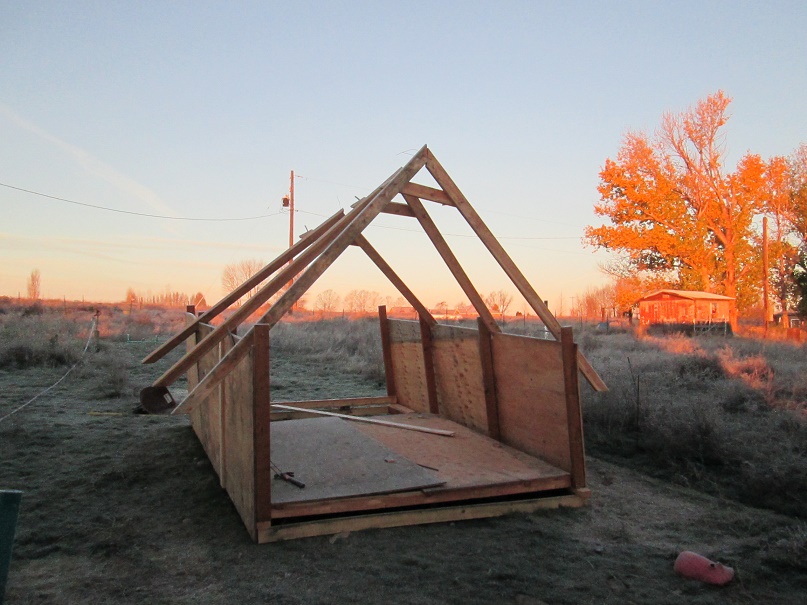
My dad will show anyone the meaning of perception versus reality.  Because he is blind, so many people perceive him as helpless.  He’s not!  He’s built sheds and half a cabin, raised and butchered chickens and rabbits, hauled dirt, sawn logs, cut down trees with a two man cross cut saw, split wood, programmed his own word processor, designed robots, put together a 3-d printer from a kit, earned an aerospace degree and a masters in adult education, written several books, fixed a washing machine, and a whole lot more.  His blog is here, if anyone wants to check it out.

dad-shed

Even though he moves confidently and independently, people still see what their preconceived notions tell them to see, rather than their perceptions.  For instance, one time someone looked at him going up a set of stairs and gushed “that’s AMAZING!”  Not one to overlook an opportunity for fun, he had something to say when he went down the stairs again.  He paused, then said “Amazing Dave is poised on the pad, the gantry is retracted, and we are go for liftoff.”

My dad has helped teach me that living blindly can happen quite a bit in people with sight.  My wife has taught me more, about how not to live blindly.  The key is mindfulness.


via Daily Prompt: Blindly

https://dailypost.wordpress.com/prompts/blindly/

Artistic Tenacity

To be any kind of an artist, tenacity is a critical skill.  Whether you are writing, painting or dancing, you must continue to push your limits.  When others don’t believe in you, standing firm against the naysayers will allow you to keep creating.  When someone has hard advice, having tenacity will help you take it and improve.  Tenacity can mean being responsive to events, using a setback as an opportunity.  Tenacity makes success possible. Those who don’t have it rarely succeed!

There’s good news.  Even if you’re a person who gives up easily, tenacity can be built.  Though it can be a natural quality, it can also be a habit.  Just practice not giving up.  If you don’t succeed, just try again later.  As a skill, it can be learned.

Winston Churchill knew a lot about tenacity.  When he was young, he was thin and weak, but he made himself an athlete.  He was terrified of public speaking, but he forced himself to learn and became one of the best orators in history.  That spirit serves all artists and creative people well!

Churchill quotes about tenacity:

“Attitude is a little thing that makes a BIG difference.”

“Continuous effort – not strength or intelligence – is the key to unlocking our potential.”

“Success consists of going from failure to failure without loss of enthusiasm.”

“Every day you may make progress. Every step may be fruitful. Yet there will stretch out before you an ever-lengthening, ever-ascending, ever-improving path. You know you will never get to the end of the journey. But this, so far from discouraging, only adds to the joy and glory of the climb.”

“Success is not final, failure is not fatal, it is the courage to continue that counts.”

“What is adequacy? Adequacy is no standard at all.”

“It is wonderful what great strides can be made when there is a resolute purpose behind them.”

“This is the lesson: never give in, never give in, never, never, never, never — in nothing, great or small, large or petty — never give in except to convictions of honour and good sense. Never yield to force; never yield to the apparently overwhelming might of the enemy.”

-Winston Churchill


via Daily Prompt: Tenacious

https://dailypost.wordpress.com/prompts/tenacious/

My fluffy security guard

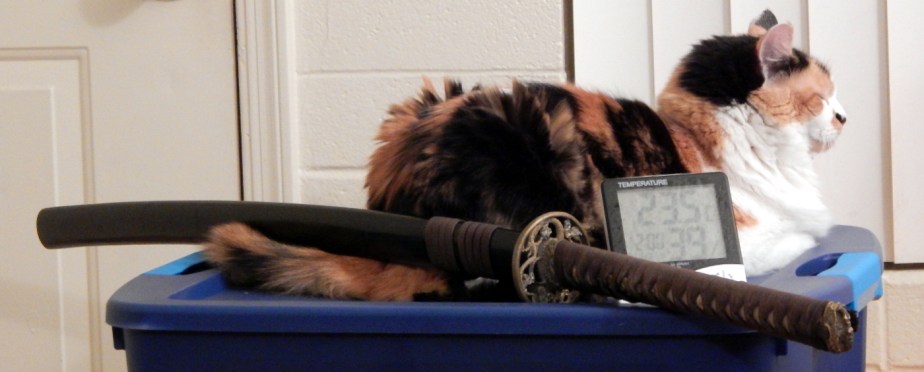
Our site mascot, Nezumi, makes a good security guard.  She watches out the front blinds to make sure I get home safe, she puts us to bed when it’s time, and she does a great job of monitoring the neighborhood.  No bug or lizard is safe from her – if she can’t catch it herself, she’ll tell us it’s there.  Here she is with one of of our katanas.

nezumi-bushi-1400

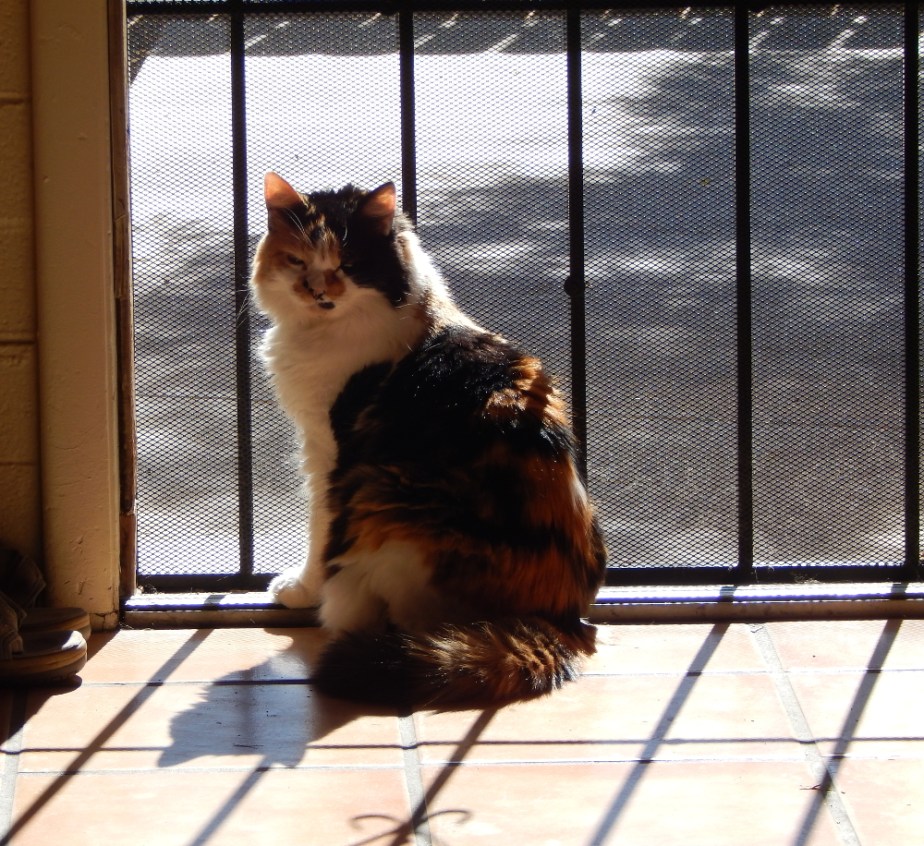
A great thing to have in Arizona is something called a security screen.  She loves to sit at them and we have one at the front and the back of the house.  It’s a heavy duty screen door with bars to prevent burglary.  They’re sturdy and I really like having them on my home.  They also make great lizard and bird watching stations.  Sometimes baby lizards crawl up ours.  Here’s one, looking out toward our tall back fence:

doo doo doo lookin out my back door.JPG

Finally, here’s one of the things Nezumi doesn’t want coming inside.  Then again, she might really like it to come inside, but it wouldn’t want to once she found it!

lizard-1000

https://dailypost.wordpress.com/photo-challenges/security/

It’s Prudent to prepare

Disaster preparedness is not something to be ashamed of. It’s just good thinking.

When I read comments about being prepared for a natural disaster, I often see traces of embarrassment or defensiveness inherent in the message. I think this happens because it is so easy to be labeled an “extremist” or a “radical fringe element” or a “prepper” or a “survivalist.”

Shouldn’t we all be “survivalists?” That is, shouldn’t we all be focused on survival? Independent of rogue government elements, market collapse, alien invasion, rogue six legged GMO cows from the secret Monsanto corn mazes, or whatever, there are still the age old concerns of famine, fire, and flood. It’s only smart to have some stored food, some medical supplies, some survival skills, and some tools. It’s really, really naive to just assume that the mechanism of modern society will keep ticking on, despite all ravages of earthquake, blackout, tornado, ice storm, blocked road, or vicissitude of human stupidity.

It doesn’t have to take much. Some sealed gallons of water. Some cans of tuna or the ever popular beans. An extra month of medications.  Pet food.  Rechargeable LED flashlights. A few extra blankets.  A sturdy knife.  A first aid kit and a little basic training. You can work up from there, but even a little bit of preparation could mean the difference between life and death, comfort and hardship. It pays to know how to build a fire, clean a wound, cook over an open flame, where it is safe to use fire and where it is not, how to purify water, how to keep warm without heat, how to change a tire, how to light your way at night.

Training such as this has quite literally saved my life and it wasn’t hard to acquire. You never know when you may have to boil a pot of beans or know how to keep your water clean!

via Daily Prompt: Prudent

https://dailypost.wordpress.com/prompts/prudent/

Freelancer tip: Avoid clients who pay… later.

Payment can be a tough subject for many of us who are freelancers.  Yet, it’s important!  After all, why are we working?  Sure, we truly enjoy our craft, whether it be writing, visual art, graphic design, crafts, or whatever the case may be.  But we don’t do it purely for love.  We do it because we need something to pay the bills and put food on the table.

That’s why today’s post is dedicated to that most uplifting of prose, “pay to the order of.”  We’ll talk about pay, getting paid, and things to do to make sure you get paid!  If anyone has questions, feel free to ask and I’ll probably add it on as another question.

Tips for Freelancers:

Set clear expectations.

Have a place on your website that explains when you expect to be paid, how much, and when.  Then you will have a leg to stand on when someone starts to argue.  For an example, check out my commissions page:  http://rohvannynshaw.com/commissions/

Have a contract.

This helps both client and creator understand the terms of the deal, and protects both if something goes wrong.  When is pay expected?  When is the work supposed to be complete?  What is the scope of the work, and how many rounds of editing are allowed before the client needs to pay more?  This prevents clients from adding extra things or deciding to pay… later.  Keep all copies and send the contract in a PDF if you have to email it, that way nothing can be changed.

Price fairly.

This means not pricing too high, but it also means not pricing too low.  Do research in your field, and see what other people doing similar work get paid.  If you price too high, you may not get customers.  If you price too low, you devalue other people’s work and you also may drive customers off.  After all, no one likes to buy at a fire sale.

Keep all records.

I said it above, but it bears repeating.  Don’t just keep the contract.  Also keep all emails (preferably archived in PDF format) related to the project, all materials provided to you, and any other correspondence.  Keep it in a separate folder and if possible archive it on a thumb drive, just so you have it ready to hand in case you need it.  This way, if someone takes legal action against you, or you need to do the same, you’ll have everything and won’t have to go hunting around.

Don’t discount.

Family and friends are famous for asking for “buddy discounts.”  The trouble with this is, they often start offering that same discount to their own friends.  Pretty soon every available client seems to think they should get the family rate.  I didn’t think this would happened to me and it did – so it can happen to anyone.  It can happen to you.  So price fairly and then if they give you static, calmly explain that this is the going rate for professional work.

Don’t “do it for the clicks.”

Doing work for exposure only goes so far.  I write for free on this blog and I feature artists and authors for free.  However, I never do art, editing, or manuscripts for free.  You can’t eat clicks, you can’t pay bills with exposure.  Not only that, but every time someone does something for free it drives down the value of what other freelancers do!

Fire clients if you have to.

It can be scary to fire a client.  You may think “I’ll never find another,” or “how am I supposed to work if I fire my clients?”  So I’m not saying to fire every client, or to do it quickly and easily.  However, some people are just not worth your valuable time or stress level.  If you have a client who keeps trying to get you to lower your rates after you’ve agreed on a price, or if they treat you badly, or if they make it impossible to do a good job, fire them.  Do it simply, do it calmly, and you don’t have to explain why.

Set limits on how much you will do for a certain fee.

If you write, put a clause in your contract saying “includes three rounds of editing.”  You can do something similar for art.  If you build websites, find out up front  how many pages you’ll be designing.  Think similarly for any other project.  Otherwise, you may have a client who creates a seemingly endless project for one low starter fee.

Don’t undersell the competition by too great a margin.

If everyone is designing book covers for $200-$500, don’t say “hey, I’ll do just as good a job for ten bucks!”  You’ll see this all over DeviantArt.  People will do amazing work for five or ten dollars, or even for free.  Now, the artists are just thinking about having fun and not considering the effects of what they are doing.  However, you have a choice.  For every freelancer who offers services at rock bottom prices, other freelancers can’t put food on the table because people are using the ultra-cheap options offered by the irresponsible freelancers.  Sites like Fiverr.com, by offering extremely low prices, are ultimately harming the industry.  Don’t be part of that trend.  Remind your clients and potential clients that they get what they pay for, and can rely on  you to provide professional, responsible service at a fair price.

Be responsive to questions.

When someone asks a question about you or your business, be friendly, informative, and respond quickly.  This is especially true if they contact you via your contact link on your website.  One of the great things about hiring a freelancer is being able to communicate openly with them, so help people see that advantage by being there.

Be punctual and professional.

Similarly, if there is a time expectation set, meet or exceed that expectation.  Use good business style in all your communications.  Be unfailingly polite and cheerful.  Explain things clearly and answer all questions.  If there is a misunderstanding, be as clear as you can and try to help your client understand.  Sometimes misunderstandings can be as simple as a different use of language, and easily solved with a few questions.

Being a freelancer can be a lot of fun and a very rewarding career.  Following these tips will help it be even better!

via Daily Prompt: Later\

https://dailypost.wordpress.com/prompts/later/

Abby Vandiver – Passport to Mystery

Mindflight welcomes Abby Vandiver, mystery author, who is announcing the launch of a new boxed set, and a new novel!

When did you know you wanted to write?  Abby1

I didn’t realize I could write until I got to college, and didn’t realize that I wanted to write until my late thirties. Never too old to try something new, right?

What is your favorite genre and length? Novels? Short stories? Flash
fiction?

Mystery is my favorite genre. I love following clues, and trying to figure out what happens. No short stories, and no “War and Peace” length books.

What is your biggest writing challenge?

Ironing out the logic gaps. Although, I’m good at seeing them, sometimes I have to really think how to bring everything together logically.

What is your favorite part of writing?

Making my characters come alive. I usually base my characters on people I know, so translating that to paper (computer) can be fun.

What do you like to read?

Mysteries.

Did you read a book or series that was really influential to you?

Nope. I read for fun.

What is your latest book about?

I am actually working on several books. They are all mystery books. One is another installment in my Logan Dickerson Cozy Mystery series. Then, I’m starting a new series, where all the books take place in the same place, but each book tells a different story, and then I’m thinking about doing a sci-fi-ish kind of mystery book. We’ll see how all of that goes!

If you could do anything as a writer, what would you do?  

Write a million copy seller.

Do you have any advice for beginning writers?

Yes. Get your work critiqued and find an editor. Beta readers are excellent, and a lot of them are free. All authors should utilize their services.

If you could have changed one thing about your early career as an
author, what would it be?

I would first learn the rules of writing. Who knew any existed. I just thought I could sit at the computer and punch out my story. Doesn’t work like that. So, now with learning the right way to write, I have to also get rid of my bad habits.

I can relate!  What does success mean to you?

That people enjoy my books.

Thank you for appearing on Mindflight!  I wish you much happiness and success in your career.

Logan Dickerson Cozy Mystery Boxed Set Books 1-3 became available for pre-order on March 29!

Cozy Mystery Boxed Set Amazon

I’ll put up the link for South Seas Shenanigans when it’s out!  In the meantime, here’s a foretaste:

South Seas Shenanigans Cover

It’s the sixth installment of an Amazon #1 Best Selling cozy mystery series by Author Abby Vandiver! South Seas Shenanigans continue the adventures of amateur sleuths, Logan Dickerson, archaeologist, and Vivienne Pennywell, aka, Miss Vivee, a five-foot nothing, ninety-something Voodoo herbalist.

Fans of this series have enjoyed the unusual, rarely heard causes of death that only Miss Vivee and her new husband can recognize and this one doesn’t disappoint! Sail away with amateur sleuths, Logan, Miss Vivee and Mac as they vacation in Fiji where they suffer the shenanigans of a prankster, dance the Meke, and solve an untimely death. Oh, wait! Did I say “a” death? Make that two!

Additionally, Abby is offering a boxed set the first three books in the series. Both South Seas Shenanigans and the Logan Dickerson Cozy Mystery Boxed Set are to be released March 29, 2017. Meanwhile, Abby had only planned to write one more book in the series, but she listened to her fans and has decided to continue writing the series a little longer. Check out her website for more information.

Website: http://www.abbyvandiver.com
Twitter: https://twitter.com/AbbyVandiver
Facebook: https://www.facebook.com/authorabbyl.vandiver
Email: abbylvandiver@aol.com

For more information about Abby Vandiver:

Through her various occupations, Abby discovered her love of writing. She’d always been told she had a gift for telling stories, combining the two, she became an author.

Her debut novel, the mystery/sci-fi, In the Beginning, Book I in the Mars Origin “I” Series was an Amazon #1 bestseller. It was written on a whim, packed away, and rediscovered some twelve years later. After publishing it in 2013, Abby decided to make writing a full-time endeavor. She’s penned a slew of novels since then and has even more in her head. Although she writes mostly mystery, she has co-authored a historical/women’s fiction novel with author and friend, Kathryn Dionne, under the pen name Kathryn Longino. Currently she is working on several Cozy Mystery series, including the Logan Dickerson Cozy Mystery Series which was an Amazon #1 International Best Seller and soon-to-be released Normal Junction Paranormal Cozy Mystery Series.

A former lawyer and college professor, Abby has a bachelor’s degree in Economics, a master’s in Public Administration, and a Juris Doctor. A lifetime resident of Cleveland, Ohio, Abby spends all of her time writing and enjoying her wonderful grandchildren.

via Daily Prompt: Passport

https://dailypost.wordpress.com/prompts/passport/

Dense Textures in the desert

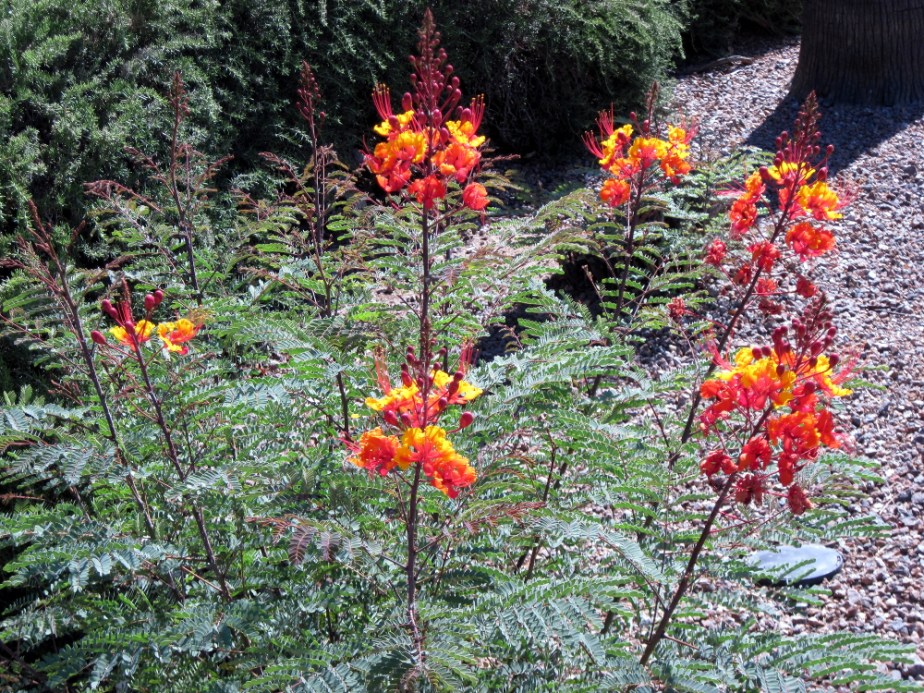
Some of these photos have been featured in other posts of mine, but they all have dense visual texture.  I find that Arizona offers a lot of opportunities for this, whether in the rugged bark of an old olive tree, the close set spines of a barrel cactus, or even in the pinkish, multicolored gravel that seems to be everywhere.


library-flowers

golden-green-1000

IMG_0039

IMG_0033

Cactus Art Print 1000


via Photo Challenge: Dense

https://dailypost.wordpress.com/photo-challenges/dense/

Avoiding Purple Prose


Many readers shut the book or turn off their eReader when they see too much prose that’s purple!  It’s really best to avoid it.  First, though, what’s purple prose?

Wikipedia has to say this about it:

In literary criticism, purple prose is prose text that is so extravagant, ornate, or flowery as to break the flow and draw excessive attention to itself.[1] Purple prose is characterized by the extensive use of adjectives, adverbs, and metaphors. When it is limited to certain passages, they may be termed purple patches or purple passages, standing out from the rest of the work.

Wikipedia further gives this amusing example:

“On occasion, one finds oneself immersed in the literary throes of a piece of prose where there is very little in the way of advancement of the plot or development of the characters, but the pages are still filled with words. Since the esteemed author has allowed their writing to take a turn for the dry and dull, they gallantly attempt to overcompensate for the lack of stimulation by indulging in elaborate turns of phrase.”[8]                 – Liz Bureman

The best way I’ve found to avoid this literary pitfall is this: write simply.  If you use good, vivid words, it will help you avoid using excess words to make your point.

It’s really worthwhile to go through a manuscript and look for places where you could have said something more simply, clearly, and effectively.  While it’s impossible avoid adjectives, trimming excessive ones can help your work.  Always strive to make one paragraph flow naturally into another, without anything to jolt your reader out of the story you are telling.

When using metaphor, simple is usually best.  Make sure your metaphors aren’t cliched.  A cliche not only kicks the reader out of the story, but it often makes them stop thinking about what you have said.  A great metaphor engages the senses simply, but in a way that makes the reader share the experience you are presenting.

To further avoid prose of a purplish color, break up your sentences.  Also, make sure your words are active, not passive.  Sometimes it helps you read your work aloud.  This lets us hear how the story is flowing, and find the faults more easily.  Many times I’ve read a finished story out loud, only to make half a dozen corrections as I go along.

As I have simplified my writing and gotten away from purple prose, I’ve seen it improve tremendously.  If you’re like me, you can too.

via Daily Prompt: Purple

https://dailypost.wordpress.com/prompts/purple/

Lenore Plassman – Other than Ordinary

Today we have an author, poet, gardener, and animal rights advocate named Lenore Plassman.  Her specialty is short stories and she writes poetry prolifically.  It’s a pleasure to have her on Friday Feature!

Diablo 3.jpg

What is your favorite kind of book to read?

All types but there must be elements of poetry and brain marbles rolling to keep my attention.  There must be scads of careful detail and delight in the literary landscape.

What is your favorite genre to write?

My favorite genre- to write?  Poetry creeps into everything I scribble so I’m going with poetry.

What makes you feel most creative?

Exact here: what makes me feel most creative?  Trees and waterscapes; creeks and rivers and inlets and islands. And characters, human or otherwise; rocks and nature and trails that test my strength and of course botanicals of all sorts.

What is your biggest challenge?

My biggest challenges are my wide feet and my inability to not be clumsy when dancing.  Please do not ask me to sing.
When you were young, when did you first know you wanted to be a writer?

When I was young did I know I wanted to be a writer?  No.  A teacher suggested I could write as well as read so I did then from there the people around me watched me write but never nudged me in any direction or form.  I just did so I was. A writer.

Do you have any advice for a person who wants to be a writer?

Advice for someone wanting to be a writer?  Quit wishing.  Get out and examine what is you.  What interests you. How exactly is that interest uniquely you- I do not want to read your work on green grass.  I want to read your work on how one day your Grandma twisted plaits of grass in your hair and from then on grass meant Grandma and summer. I want to read that.

Were any books or authors particularly influential to you?

Folks who influenced me: in particular.  Walt Whitman.  Hemingway.  Faulkner.  To some extent, Emily Dickinson.

What are you working on now?

I’m in a lull.  I write poetry as it flies in; recording what is around me.  I’m also working on interviewing community members and garnering articles from them.  I have never thought of myself as a journalist so this is a literary dance that stretches my horizons.  I’m enjoying the experience though I also have stage fright about it.

If you could do anything special with your writing, what would it be?

I’d like to watch a person who never thought they could ever carve out a literary gem, do that.  I’d like to see that person laugh when their loved one came back to them, delighted at their effort.  I’d like to witness that gotcha moment.  That would be nice.

Here’s a little more info about her:

Lenore’s poetry and short stories derive mostly from her love of nature and the things living in it, as well as the colorful characters she has known as child and adult.

Lenore became serious about writing at about age 8, with the encouragement of a special teacher. This led her eventually to study English at the University of Washington.

Her experience caring for animals in a veterinary clinic, living in farming country, and working in elder care adds richness and interest to her narratives.

Lenore’s creative imagination takes form in her three acre which she calls her Private World. Here, numerous pocket gardens, a cow stanchion (last remnant of her family’s farm), a hillside fountain, and other colorful surprises sharing space with chickens, dogs, cats, and a burro. A painting of Gandalf guards one shed-side, Smaug the other.

A respite is found here, for friends and visitors, from city humdrumness. Several times a year Lenore journeys to Western Washington to hike in the Cascades, study and participate in writing workshops. All of the photography shown in these pages are places she has walked and from which she continues to learn.

In Lenore’s words:

“I generally allow my work to stand up and speak for itself. Currently I am stationed in the arid side of Washington state. I am a co-CEO of a small holding. I care for various birds, a burro, gardens. My husband and I take prybars to rocks in the garden and hope for rain. And sometimes poetry worms its way out of those rocks and sagebrush. Imagery never leaves my side. Bast, the cat Goddess, reigns, clawing poetic snippets out when I’d rather She left me alone.”

Her thoughts and writings can be found here:

Creative-fancy.org

Her books can be found here:

Books

Check out her most recent poetry chapbook!

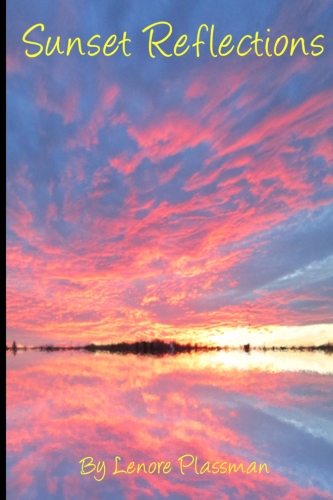
BookCoverImage


via Daily Prompt: Ordinary

https://dailypost.wordpress.com/prompts/ordinary/

A Painful Symptom: Treating the dreaded leg cramp

Whether from exertion in the heat or a night time charley horse, cramps are no fun at all.  Just the other night, I was nearly crippled by a nasty cramp in my ankle that seriously threatened my ability to walk and drive.  Luckily, I knew what to do and the painful spasm was cleared in just a minute or two.  You can do the same!

Prevention

Stretch your legs before bed and/or lightly massage them.

Don’t tense your muscles or point your toes in bed.

Supplement with calcium – tablet style antacids like Tums work great for this.

Eat enough potassium.  A banana is easily absorbed and cheap too.

Magnesium is also said to help.  This can be found in nuts as well as other places.

Drink enough water, especially if you’ve been exercising in the heat.

Treatment

When the cramp first hits, flex your foot if it’s in the leg.  If it’s somewhere else, relieve the tension on it and try to work the muscle around.  Massage the muscle.

Stand on the foot if possible, but take it easy – you don’t want to strain your muscle.

Stretch the muscles gently.  The pain will go away eventually – breathe through it.

Drink some potassium bearing substance right away.

Gatorade, Powerade, Pedialyte, or any generic sports drink.

Coconut water is also great for potassium replenishment.

The Ultimate Cramp Fix

This last remedy deserves a section of its own.  It might sound strange but it really, actually works.  When I have a very nasty cramp, I drink a couple ounces of pickle juice and the cramp is usually completely gone within just a couple of minutes.  If you don’t have juice, eat a couple of plain dill pickles.  This is actually science based. Even for stubborn cramps, this remedy works faster than anything else.


via Daily Prompt: Symptom

https://dailypost.wordpress.com/prompts/symptom/