Two tips for writing fiction

Tip #1:

Get it all down before editing!

I have started many novels and many more short stories. I also have a bad habit of not finishing them!  Luckily, I finally found one of the secrets to finishing them and so I’ll share it with you.

The key? Don’t start editing as you go along. I’ve gotten more done in a shorter time than I thought possible, just by posting on an online site.   (This can be public or private, by the way.)

Why? Because it forces me to keep moving forward. Instead of writing two pages, going back, changing things, editing, and reworking, I write two pages, post them, write the next two, and keep on going. I’ve made a few notes about things to include or change later but I’ve gotten a lot more of the actual story told than I otherwise would have. So keep writing! Don’t stop till you are done, and then go back and polish! You will notice a difference.


Tip #2:

Embrace conflict and confrontation in your stories

Why? Because conflict is what creates drama. Conflict doesn’t have to be argument between people. It can mean an obstacle to the character’s goal. Conflict of some type is usually needed for an interesting story.

Your character is trying to get to grandma’s house, but there is snow in the way and the horse doesn’t want to pull the sleigh. Will your character ever get to grandma’s house? Or will they be able to convince the horse to pull the sleigh?  On the way, what if there are robbers or sheep wearing wolf suits?  Anything could happen.

The challenge to the character creates the suspense, the drama.  If it was a story about how the person got in the sleigh and everything went perfectly, it would be boring, wouldn’t it?  That can be fun for a scene, or to set the stage for something else, but not as a whole story.  You’d think that would be obvious, but can’t we all think of stories where the author didn’t think of it?

Use conflict and confrontation as tools to add spice to your stories.  At the very least, try being aware of the conflict in a story as you read it, and watch how it makes that story more interesting.

Drawing Maps

Drawing maps can be a lot of fun. They look neat and complicated when you are done, but they are really pretty simple, the two biggest problems are keeping the symbols the same and making sure the geology is somewhat logical. Here is how I do mine.

First, I figure out what the land will look like. Will it be a big continent? Part of a continent? Large islands? A tiny archipelago? Sometimes I use real world places for inspiration, or just draw a loose squiggle and refine that.

Then, I look at where the mountains will be. I usually put mine toward the middle of continents, or toward one side, and usually in rough lines. I try to imitate how real mountain ranges grow. I pencil them in lightly at first so I can move them around. When I ink them in, I use a fairly simple upside down v shape with a little shadowing on one side.

I look at the relationship between the mountains and the sea. Using them as a guide, I start to trace where rivers will go, flowing from the peaks down to the sea. I remind myself that streams converge as they flow, instead of branching out. I might put in a lake or two just for fun.

At this point I know where the cities and towns might be – usually along rivers or near bays. After all, people need to get places easily, right? There might be a town near the mountains too, for mining, but usually it will also be near a river. People tend to live near water, not just for travel, but for drinking and crops.

Then you know where the roads are – between cities, or between cities and resources.

And now you know where the forests are too, usually they are thicker the nearer you are to the mountains and the farther you are from people.

You can have fun putting in caves, mineral deposits, castles, swamps and old lonely towers. Don’t forget hills, dry patches, marshland, lighthouses, beaches, rediculously huge cacti, or other embellishments.

The other secret to drawing a good map is this: keep the symbols very simple. That way you can draw a million of them with no strain.

Have fun drawing your map!

Tips for Creating a Chapbook

BookCoverImage
Click Image to See More


If you don’t know already, a chapbook is a small book filled with poetry, usually from the same poet. It is usually less than fifty pages in length. I just got done making one with my creative partner, using my mother’s poetry. Here are some hints of how we got it done:

The first step in creating a chapbook is to pick the poems. It’s best if they follow a theme.

Next, decide what embellishments or illustrations are going to be used. They can be anything from clipart to photos to illustrations. I used pen and ink illustrations, reduced town to pure black and white, one to a poem. So the format had one poem with one facing illustration. It’s best if there is spacing between poems like that, so each one can be savored and enjoyed individually.

Next, decide the format. We chose 6″ by 9″ perfect bound, because it allowed higher quality than a folded, stapled, booklet style, at the same time as being less expensive to print. Shop around, both at your local business supply stores, as well as at online self publishing places like CreateSpace.

Then, get the illustrations and decide what is going to go with what. Choose a good, readable font, and if the font is going to be some kind of handwriting, make sure it’s large enough to read. As you format the poems, make sure you know how wide the margins should be with the publisher you have picked.

Design the cover – again, check the minimum print resolution – how many pixels for inch, measurements, that kind of thing. Make sure to leave space for the bar code if you are using CreateSpace.

Tip: When creating the interior file, make sure you set the page size and margin width before you begin, that way you are doing it correctly from the start.

Lastly, when everything is the way you want it, convert the file to PDF. Do the same thing with the cover art. The PDF format locks the file so your format stays the same and can’t be changed. It forces the printer to make it just as you wanted it. LibreOffice will do file conversions very easily, and GIMP will convert your cover art into a PDF as well. Both are free programs with no ads or spyware.

Then send your PDFs to the printer, whether it’s an office supply store’s printing services, or CreateSpace, or wherever you want to use. Happy creating!

Essential Tips for Aspiring Writers

I’ve watched the publishing industry change radically over the years, helped publish a few books, and in all of it I’ve seen that certain things remain true. So I have come up with some tips and rules to help protect you from career-breaking mistakes.

Do not ever pay an agent fee or pay a company a publishing charge. Those are used by vanity publishers and scam artists to separate you from your money and give you nothing. I don’t care how good they make the deal look stay away!

If you are an aspiring writer and want to be published traditionally, do not let your desire blind you to scam artists. Get a copy of Writer’s Market, find an agent that will look at your work. Do not pay anyone. Be particularly wary of any unsolicited emails from publishing companies with glowing testimonials, compliments about your work, and promises of big profits. I’m looking at you, SBPRA!

Carefully check any contracts to make sure you retain control over your work. Look for hidden fees. Get someone else to look at it with you if you have to.

When you self publish, and even if you don’t, use a beta reader. Have one or more people carefully read your work, looking for typos, misspelled words, awkward grammar, or anything else that will make your work look less than its best. The more eyes, the better!

Write what you love, write what you know, and never ever write something you don’t know without expert help. That is, talk it over with someone who knows the subject and then listen to what they have to say!

Inventing Worlds

When I was younger, I read a book that absolutely fascinated me. I checked it out from the library again and again. It was all about creating imaginary kingdoms and building them in miniature form with old cans, oatmeal containers, cardboard boxes, and such. I loved that book. I remember turning a big table into my “kingdom,” and all the people who lived there worshiped the Great God Tagamet. They were somewhat inspired by ancient Egypt, as I recall.

I still enjoy creating worlds, though usually I make maps of them or write stories, rather than creating miniatures. When I wrote my novel, “The Dice of Fate,” I had a lot of fun figuring out how things would be. What climate was I going to choose for the area my story was in? What type of plant life?  What type of animals? As it happened, I chose a mountainous area with a wide valley and a river running through it. The trees were mostly deciduous, though there were some conifers too, and there were ancient ruins and a mysterious Road that had been there for ten thousand years or more.

Once you know what kind of place you are imagining, you can have lots of fun deciding about civilizations, trade routes, where resources are, how people get from place to place, what kind of agriculture they have, what kind of technology, and on and on. The possibilities are literally endless!

What to do with this information? Write a story, draw a picture, create a roleplaying scenario, make a miniature, or just dream. Imagination keeps the mind young.

Meter is like the recipe for a beautiful poem

It seems to me that meter and rhyme in poetry is like a recipe for beauty. It’s like saying “although a poem can take any form, if you follow these rules you have a greater likelihood of writing a nicely structured poem that will be pleasing to the ear.” I used to think of the rules of the various kinds of poetry as useless and arbitrary, and perhaps they are, but there are some distinct advantages as well. For example, it’s really easy to love a well structured sonnet.

One of my favorite forms of sonnet uses three quartets and a couplet, and iambic pentameter. I haven’t had the guts to write one, but I will one day. I like that form of sonnet because I understand it and because it really sounds good to me. So much of poetic structure is really fairly understandable once you break it down. It’s remembering what is called what that always trips me up!

Here’s an example. “Iambic pentameter” just means a line where there are five beats to it. The “beats” are made by the stress on the syllables. Example:

the BEATS are MADE by ALL the STRESS in WORDS.

If you stressed the syllables as shown, that would be pentameter. “Pent” just means five, like pentagon. That is the foundation of a lot of poetry and quite a bit of what Shakespeare wrote. Maybe I’ll try writing a sonnet now!

Entertainment: Change for Change’s Sake

If we are going to redo a well known story, I hope that the creators have a really good reason to make those changes. I don’t care if a retelling or reboot is different than the original if there’s a good reason other than “hey, we need more fart jokes” or “hey, it was boring when it made sense. Let’s make it NOT make sense.” I also have no problem where reboots or retellings cause the original material to make MORE sense, but this is usually quite rare.

I’m sick and tired of creators who want to tell a story, but are too lazy to write their own Instead they decide to use someone else’s story, and then make changes to it with no rhyme or reason. Take the movie “Starship Troopers” for example. Paul Verhoeven turned a thoughtful, Libertarian story into a film that simultaneously ridiculed the original material and also made it look like it supported fascism. A book that made some damn good points was turned into an orgy of mindless gore and chest thumping faux patriotism. Robert Heinlein is probably spinning in his grave.

There are so many examples of this, if you look around. “Let’s throw in a kid. A kid makes everything better.” “This character would be more interesting if they were a man/woman.” “Let’s take the original character, and completely flip everything around including their national origin and personality.” “How about changing the philosophical intent of the book/movie/game/whatever? That’s a good trick!” “Why? Because we can.”

How about a remake of a book or a movie that went closer to the original intent?

How about you? Have you seen this happening too?

Writing Tackle: Sealing Wax


Sometimes I have fun writing letters. At my best, I had a box full of interesting paper, stickers, cool pens, and even a bronze seal with a stick of sealing wax to use it with. I need to make another one of those, because they are fun!

Sealing wax is neat stuff. It’s more pliable than candle wax, which will just break. You light the little wax “candle” and drip a blob onto your paper, or whatever you want to seal shut. As the wax is still soft, then you stamp it with your seal, which can even be a signet ring. I really wish I’d done a better job making my signet ring in college, I may have to make a stamp from Sculpey clay to replace it.

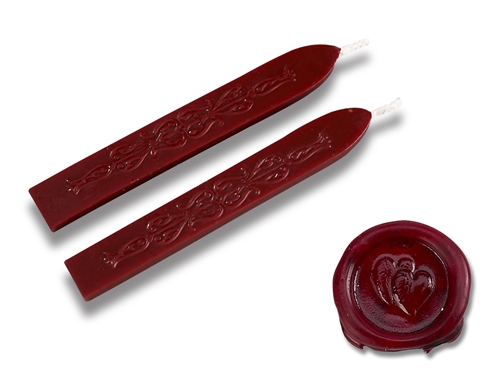
Of course, seals were often used by kings and nobles in medieval times onward, and are still occasionally used on official documents. It’s a fun way to lend an aura of regality to a letter or note. You can get seals and sealing wax at stationery stores, in all different colors. Look for something that looks like a small square candle, like this:


N2138BUNI-2

Pros and Cons of Print On Demand Publishing

I started talking about this my last post about print on demand publishing, which is an increasingly popular way of getting books published.

Print on demand is nice because it doesn’t generate as much waste by printing books no one will read. You get a bigger share of each book’s cost, you have full control of everything, and you retain your rights. Unlike traditional publishing, you won’t have an editor telling you to include something or leave something out. You won’t have forced rewrites. On the other hand, you may not have the benefit of their experience in knowing what is salable. Also, quality control is entirely on you – you can print something that’s rough and half finished, or polished like a precious stone. It’s all up to you.

I personally like that, because I think people have much wider interests than traditional publishing companies will admit. Print on demand also lets you have more control over how much your book costs as well as how much money you will make.

Print on demand has drawbacks too.

You won’t have help with marketing your work, although that can be mitigated with good keywords and by picking a publisher that is partnered with the big bookstores. If you really want marketing help, most self publishers do offer those services but at a price, and it’s not necessary.

You won’t get an advance payment either. And you won’t have an agent to shop your work around and be a go-between with traditional publishing companies. That can be a drawback, because you don’t get that chunk of money, but at the same time if your book is popular you will end up making a lot more.

You also won’t get the name recognition or prestige of saying “I was published by Ballantine, Baen, GP Putnam and Sons, whatever…” however, that is becoming less important as more famous authors publish using ebooks and print on demand.

You won’t see your books in stores unless you buy copies (at a deeply discounted rate if you are an author) and sell them on consignment at the store. That’s not hard to set up, and that way you can sell your work at out of the way, locally owned places and control who sees your book.

Most of the cons of on demand publishing can be turned into pros, with a little thought. Flexibility, lack of waste, better profits. It’s all good!